Sun in Scorpio: what survives
Water · Scorpio
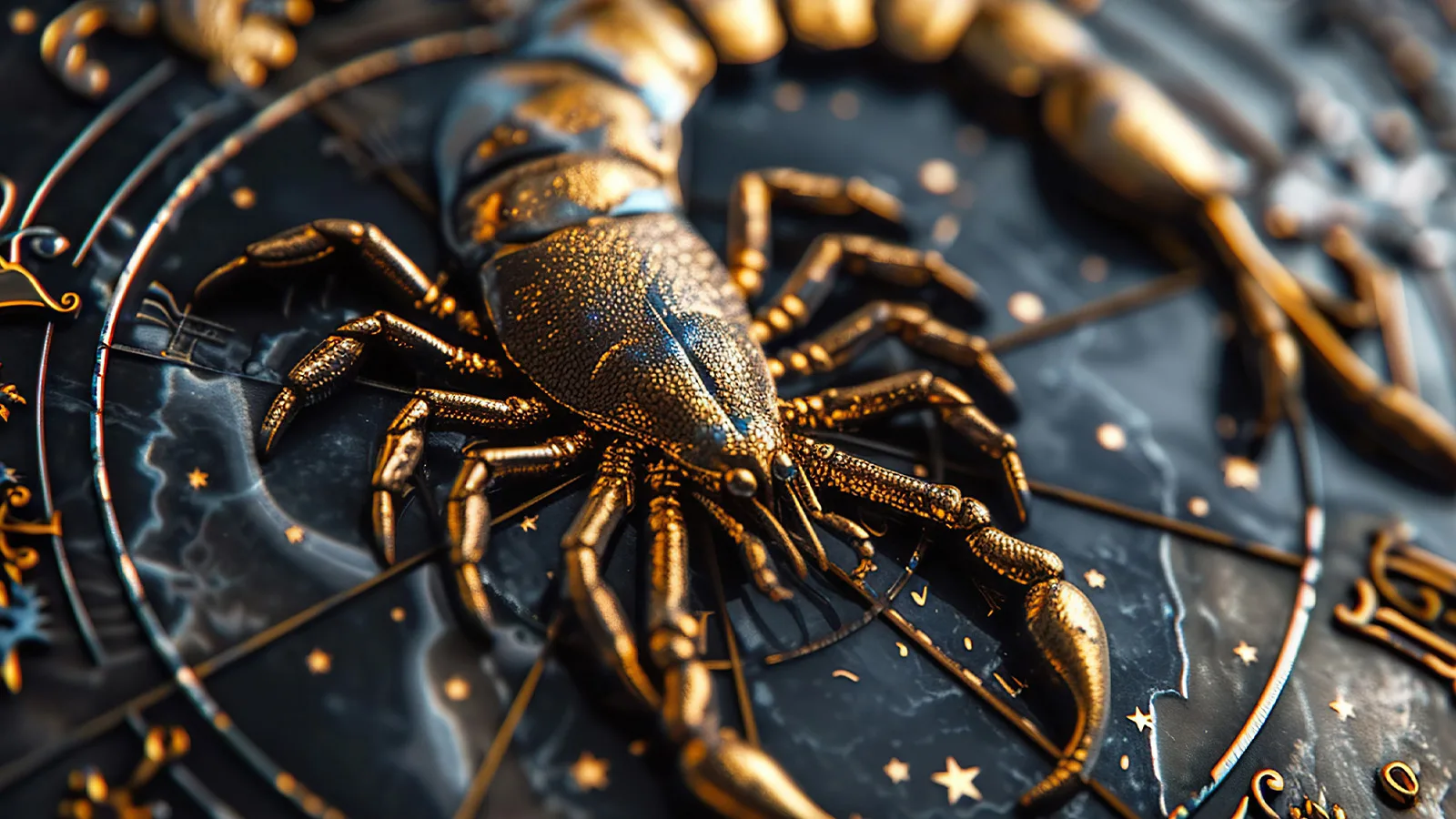
What remains after you have lost everything that could be taken?
The question is not hypothetical for the eighth sign of the zodiac. It is structural. Scorpio occupies the place in the symbolic year where the living world descends — in the northern hemisphere, these are the weeks when the leaves fall, the daylight thins, and the ground begins to harden. But the tradition has never read Scorpio as merely the sign of endings. It is the sign that asks what persists through endings — what is so essential to a person or a thing that it cannot be stripped away.
The popular reading — intense, secretive, dangerous — catches the surface tension but misses the inquiry beneath it. What the astrological tradition has encoded in Scorpio, from the Hellenistic astrologers through the medieval period into the psychological revolution of the twentieth century, is not a fascination with darkness for its own sake. It is the recognition that certain truths can only be reached by going through something, not around it. Scorpio does not avoid the difficult. It insists that the difficult is where the real information lives.
What follows is a reading of Sun in Scorpio within tropical astrology: what the tradition has made of this symbol, what modern psychological astrology has added, and what someone with this placement might usefully hold as an open question.
The tradition responds: the symbolism of Scorpio
Scorpio is fixed water: the sustained, concentrated expression of the water principle. Where Cancer (cardinal water) initiates emotional bonds and Pisces (mutable water) dissolves boundaries, Scorpio holds. It holds feeling with an intensity that other signs find either magnetic or unbearable — often both.
The fixed modality refers to concentration. The four fixed signs — Taurus, Leo, Scorpio, Aquarius — fall at the midpoint of each season, the period of maximum establishment. Scorpio occupies the depth of autumn in the northern hemisphere: not the beginning of the descent (Libra) or the transition toward winter (Sagittarius), but the point where the descent is most fully itself. The fixed quality gives Scorpio its reputation for tenacity — the emotional grip that will not release until it has understood what it is holding.
Water, as an astrological element, signifies receptivity — the capacity to be affected, to absorb, to know through feeling rather than through observation. Fixed water is therefore the most concentrated form of emotional experience: not the fluid adaptability of Pisces or the tidal responsiveness of Cancer, but the deep, still pool that does not move on the surface and holds enormous pressure beneath.
The question of rulership in Scorpio is more complex than in most signs, and worth addressing directly. In the traditional system — from Ptolemy through Lilly and the entire classical lineage — Scorpio is ruled by Mars, the planet of action, desire, and the willingness to cut through resistance. This is the Mars that does not hesitate, the Mars that acts where others deliberate. In the modern system, developed after the discovery of Pluto in 1930 and refined through the work of astrologers like Dane Rudhyar and Liz Greene, Scorpio is ruled by Pluto — the planet associated with transformation, depth psychology, the cycle of death and regeneration, and the encounter with what has been buried.
Astrian uses the modern rulership by default: Pluto rules Scorpio. But the traditional ruler Mars remains deeply relevant to any reading of the sign. A useful way to hold both is this: Mars describes how Scorpio acts — with directness, intensity, and the willingness to confront. Pluto describes why — the drive toward transformation, toward stripping away what is false to reach what is real. A complete reading of Sun in Scorpio benefits from consulting both.
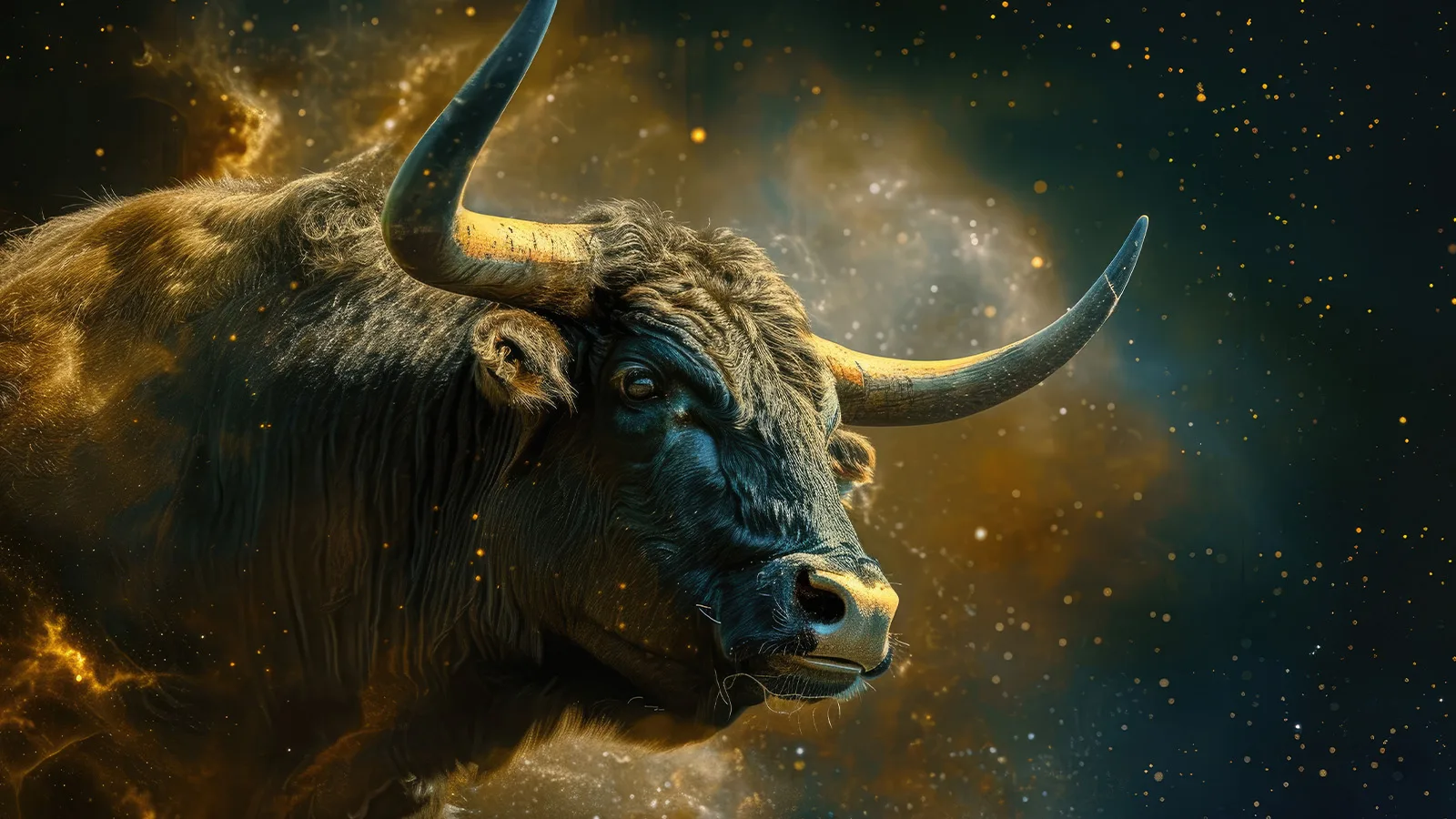
The opposite sign, Taurus, is the structural complement. Where Scorpio releases and transforms, Taurus accumulates and preserves. Where Scorpio asks "what must die?", Taurus asks "what deserves to remain?" The Scorpio-Taurus axis is the zodiac's most primal dialogue about value and loss — about what can be held and what must, eventually, be surrendered. Every Sun in Scorpio placement carries this dialogue as an interior tension.
Astronomy and position in the zodiac
The Sun moves into the tropical sign of Scorpio each year around October 23, one month after the autumn equinox. In the northern hemisphere, this is the period when autumn becomes undeniable — the color has peaked, the trees are thinning, the first frosts arrive in many latitudes. The season is not ending gently; it is being stripped. The correspondence between the natural world and the Scorpio symbolism is among the most direct in the zodiac.
The astronomical constellation of Scorpius is one of the most visually striking in the sky — a long, curving chain of bright stars that genuinely resembles the creature it represents. Its brightest star, Antares — from the Greek anti-Ares, "the rival of Mars" — is a red supergiant visible to the naked eye, one of the largest stars known. The name itself encodes the Mars connection: Antares was seen as Mars's stellar counterpart, sharing its reddish hue and its association with intensity. In traditional astrology, Antares was one of the four Royal Stars of Persia, associated with the guardian of the west and the autumn season.
As with all tropical signs, the Sun is not within the astronomical constellation of Scorpius during the dates traditionally assigned to Scorpio. The precession of the equinoxes has shifted the tropical zodiac roughly twenty-four degrees from the constellations. Astrian works with the tropical system. Those using the sidereal zodiac should expect the corresponding offset.
Sun in Scorpio
To have the Sun in Scorpio is to have one's principle of conscious orientation expressed through fixed water, ruled by Pluto in the modern system and co-signified by Mars. The Sun — which represents not personality in any static sense but the drive toward selfhood, the central organizing impulse of consciousness — finds in Scorpio an environment of uncompromising depth.
The Sun in most signs can afford a certain lightness. In Gemini it plays, in Sagittarius it explores, in Leo it performs. In Scorpio, the Sun descends. The drive toward self-knowledge passes through territory that other signs can circumnavigate: the psychological underworld of repressed feeling, unconscious motive, inherited pain, and the transformations that occur when these are brought to light. This is not morbidity. It is thoroughness.
Vettius Valens, in the second century, associated Scorpio with secrecy, strategic intelligence, and a capacity for both destruction and regeneration. William Lilly described the Scorpio type as "of a reserved, subtle mind, vindictive if provoked, but capable of deep loyalty" — a portrait that captures the sign's intensity but, characteristically of its era, emphasizes the behavioral rather than the psychological.
Modern astrology has reframed Scorpio through the lens of depth psychology. Liz Greene, in The Astrology of Fate, wrote of Scorpio as the sign that carries the Plutonian myth — the descent into the underworld, the encounter with what has been hidden, and the possibility of return. The Scorpionic question, in her Jungian reading, is not "how dark are you?" but rather: what have you refused to look at, and what happens to your life while you refuse?
Howard Sasportas described Scorpio as "the sign that heals by going into the wound rather than away from it." The metaphor is clinical: where other signs might treat symptoms, Scorpio insists on the root cause — even when the root cause is painful to expose.
Stephen Arroyo placed the water signs in the domain of the "feeling function," but distinguished Scorpio from Cancer and Pisces by its fixity: where Cancer's feeling flows and Pisces's feeling dissolves, Scorpio's feeling concentrates. It stays with the experience. It does not release until it has been fully metabolized.
The question the placement opens is not "why are you so intense?" It is closer to: what transformation is your life asking of you, and what are you clinging to that prevents it?
The shadow side
Scorpio's shadow is perhaps the most mythologized in all of astrology — and the most important to discuss without sensationalism.
The first is control as a response to vulnerability. Fixed water holds, and the shadow form of holding is the refusal to be in any situation where one might be overpowered. The Scorpio Sun who must control the emotional temperature of every room, who manages information as a form of power, who reveals nothing without strategic purpose — this is the shadow of a sign that has learned, often through early experience, that vulnerability is dangerous. Greene wrote of this as "the survivor's bargain" — the decision to never again be caught undefended, which creates its own form of imprisonment.
The second is the compulsion to expose without willingness to be exposed. Scorpio is drawn to depth — to the hidden motive, the unspoken truth, the secret that explains the surface. But the shadow form of this drive is the person who demands transparency from others while remaining opaque themselves. The psychologist who diagnoses everyone else but refuses their own analysis. The Taurus opposite, with its straightforward relationship to what is present and visible, offers the corrective: not everything requires excavation, and the demand for depth can itself become a form of aggression.
The third, more subtle, is transformation as permanent crisis. Because Scorpio is associated with the death-rebirth cycle, there is a temptation to live perpetually in the dying — to treat every change as a crisis, every ending as a trauma, every transition as a passage through the underworld. The deeper Scorpio work involves discovering that transformation, once complete, yields to ordinary life — that the phoenix, having risen, must eventually learn to walk rather than to burn.
None of this is destiny. It is the shadow material of a sign that carries, alongside these temptations, an extraordinary capacity for psychological honesty and regenerative depth.
The opposite sign: Taurus
The Scorpio-Taurus axis deserves particular emphasis because it articulates one of the most fundamental tensions in human experience: the tension between holding on and letting go.
Taurus says: this has value; keep it. Scorpio says: this has served its purpose; release it. Both are necessary. A life that only accumulates becomes stagnant; a life that only releases has no foundation. The Scorpio Sun's developmental challenge is to learn when the Taurus instinct to preserve is wisdom rather than fear — and to integrate the capacity for stability alongside the capacity for transformation.
For the Sun in Scorpio, the Taurus challenge is the challenge of simplicity. Not everything needs to be deconstructed. Not every surface conceals a depth. Sometimes the garden is beautiful because the soil is good, and the Taurus insight — that the simplest explanation is sometimes the truest — is a genuine counterweight to Scorpio's hermeneutic intensity.
Pluto, Mars, and the three decans
Because Pluto rules Scorpio in the modern system, Pluto's position in the natal chart — its sign, house, and aspects — shapes the depth of the Scorpio Sun's transformative impulse. Pluto moves slowly (roughly 12 to 31 years per sign), so its sign placement is generational. The house position is more personally significant: Pluto in the seventh house directs the transformative energy toward partnerships; Pluto in the tenth, toward career and public life.
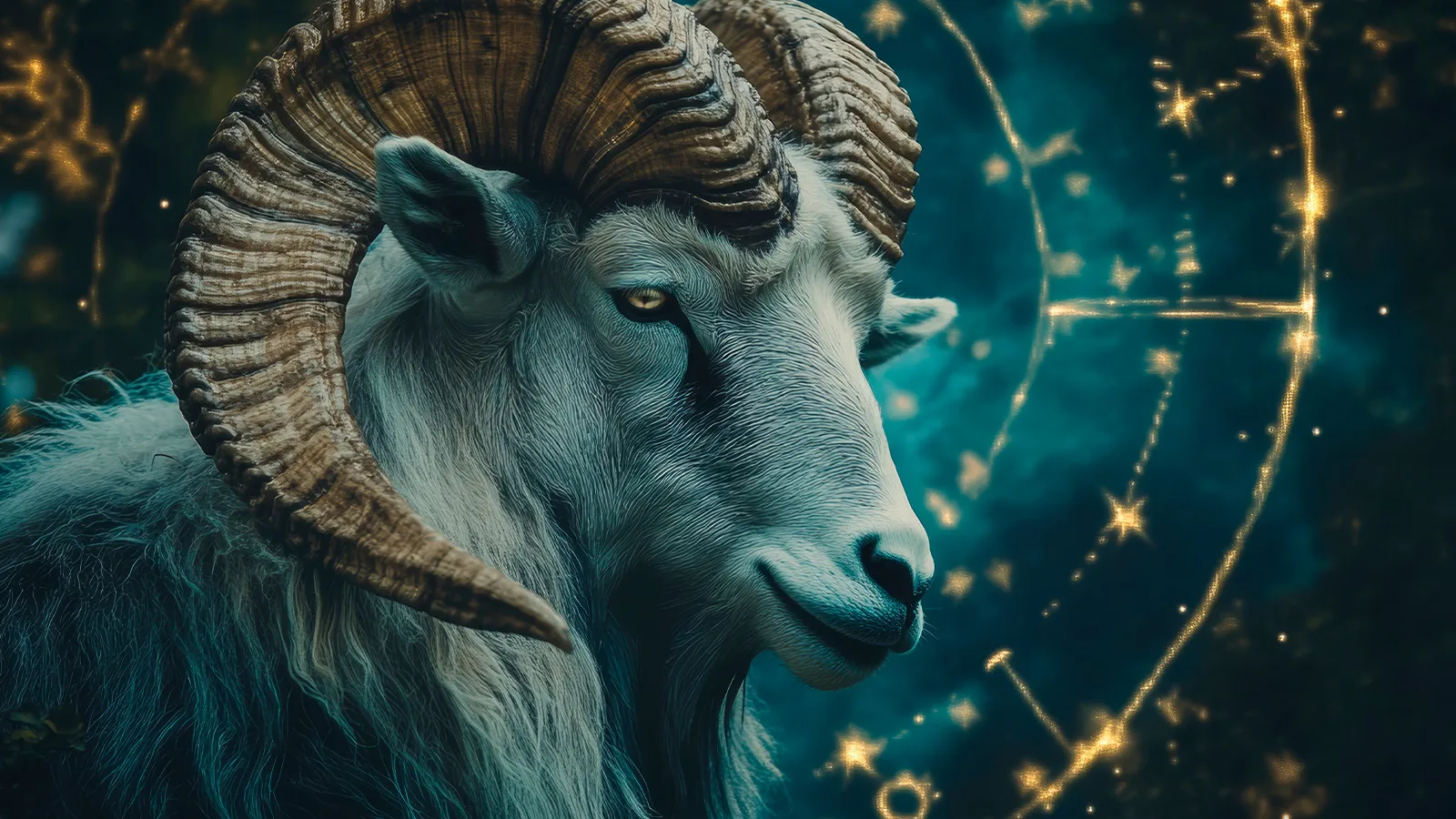
Mars, as the traditional ruler, should not be ignored. Mars's position indicates how the Scorpio Sun acts on its impulses — with what energy, in what direction, with what degree of aggression or restraint. A Scorpio Sun with Mars in diplomatic Libra acts very differently from a Scorpio Sun with Mars in assertive Aries.
The thirty degrees of Scorpio divide into three decans following the Chaldean order:
The first decan (0°–10° Scorpio), ruled by Mars, is the most immediately intense expression of the sign. People born here, roughly between October 23 and November 1, often carry the Scorpionic qualities in their most visible, confrontational form — the directness of Mars combined with the depth of fixed water. This is the decan of the warrior-detective: the person who goes straight to the point others are avoiding.
The second decan (10°–20° Scorpio), ruled by the Sun, introduces a more self-expressive, Leonine quality. The pure depth of Scorpio gains a drive toward visibility and creative expression — the person who brings what they have found in the depths back to the surface, who makes the hidden knowable. There is a warmth here that the Scorpio stereotype does not prepare you for.
The third decan (20°–30° Scorpio), ruled by Venus, carries a softer, more relational quality. The transformative instinct meets the Venusian capacity for beauty and connection — the person whose encounter with depth produces not harshness but compassion, not exposure but intimacy. This subdivision sits at the threshold of Sagittarius, and there is often an emerging philosophical quality — the beginning of the question "what does it all mean?" that the next sign will take up fully.
The Sun in Scorpio through life
The Sun in Scorpio at seventeen is not the Sun in Scorpio at fifty-five. The developmental arc, traced in the work of Greene and Sasportas, reveals a pattern shaped by the sign's relationship to transformation.
In youth, the symbol often expresses through intensity of feeling and an early awareness that the world is not as it appears. The young Scorpio Sun frequently perceives undercurrents — the tension beneath the polite conversation, the motive behind the generous gesture — and this perception can be isolating. Some young Scorpio Suns are visibly intense; others learn early to conceal the intensity beneath a calm or even detached exterior. Both strategies are responses to the same recognition: that depth is powerful, and power requires management.
By midlife, if the work of integration has progressed, the Scorpio Sun tends to develop into something more like discerning depth: the capacity not only to perceive what is hidden but to know when that perception should be acted on and when it should be held privately. The raw intensity matures into psychological intelligence — the ability to sit with complexity without needing to resolve it immediately.
In later life, Sun in Scorpio can take on the quality of the healer whose authority comes from having been wounded — the figure who, having descended into their own underworld and returned, can accompany others through theirs. The intensity of youth becomes a source of compassion rather than a weapon.
This is an idealized arc. In practice, some Scorpio Suns at sixty are more defended than they were at twenty — the control mechanisms having calcified into permanent postures. The placement is potential, not destiny.
The relationship with the rest of the chart
The note Astrian insists on: your Sun sign is one factor in a chart that contains many. The Moon may be in breezy Gemini or steady Taurus, providing an emotional texture that works against or alongside the Scorpio Sun's depth in ways no Sun-sign description can capture. The Ascendant shapes the presentation; a Scorpio Sun with a Sagittarius Ascendant — outwardly jovial, open, philosophical — is a very different encounter from a Scorpio Sun with a Scorpio Ascendant, where the intensity is immediately visible.
Both Pluto and Mars deserve attention as rulers. Their signs, houses, and aspects provide the framework within which the Scorpio Sun operates — and their relationship to each other in the chart can be as revealing as their individual positions.
The houses matter. Sun in Scorpio in the eighth house — the house traditionally associated with Scorpio's themes — operates with concentrated intensity around shared resources, psychological depth, and the experience of loss. Sun in Scorpio in the third house directs the penetrating intelligence toward communication, learning, and the immediate environment — a very different deployment of the same energy.
Astrian's calculator exists to make this larger picture accessible. If this article has opened a question about what your Scorpio Sun means, the next step is to look at the rest — and to notice how the fixed-water intensity meets, and is shaped by, everything else in the chart.
Frequently asked
Is Sun in Scorpio the same as "being a Scorpio"? In everyday speech, yes. In astrological practice, the Ascendant is often considered a more personally distinctive marker. A Scorpio Sun with a Libra Ascendant — outwardly gracious and socially skilled — is a very different first impression from a Scorpio Sun with a Capricorn Ascendant — reserved, authoritative, and immediately serious.
Does Sun in Scorpio make someone manipulative? This is one of the most damaging stereotypes in popular astrology. Scorpio carries the symbolism of psychological depth, strategic intelligence, and the awareness of hidden motives — qualities that can be used manipulatively, as can the qualities of any sign. But the same awareness that perceives others' vulnerabilities can also produce extraordinary empathy, therapeutic skill, and the capacity to be honest when honesty is uncomfortable. Whether the depth becomes manipulation or insight depends on the person's development and the rest of the chart, not on the Sun sign alone.
What is the difference between Pluto and Mars as rulers of Scorpio? In the traditional system (used before Pluto's discovery in 1930), Mars rules Scorpio — emphasizing the sign's qualities of directness, desire, and the willingness to confront. In the modern system (used by Astrian by default), Pluto rules Scorpio — emphasizing transformation, depth psychology, and the death-rebirth cycle. Both rulers illuminate different facets of the sign, and a thorough reading considers both. Mars tells you how the Scorpio Sun acts; Pluto tells you what the action serves.
Are Scorpio and Taurus incompatible? The opposite-sign pairs represent complementarity. Scorpio and Taurus share an axis concerned with value and transformation — what to hold and what to release, what endures and what must change. In relationships, this axis can produce profound depth when both people are willing to engage with what the other carries. The difficulty arises when the Scorpio partner demands transformation the Taurus partner is not ready for, or when the Taurus partner's attachment to stability prevents the necessary letting go.
Is Sun in Scorpio good or bad? Astrian's editorial position: no placement is inherently good or bad. Every position carries qualities — patterns of psychological depth, recurring questions about power and vulnerability, areas of intensity and tenderness. What matters is how the person engages with those qualities, and how the rest of the chart shapes them.
Continue reading
- Sun in Libra: the weight of balance — the sign that precedes Scorpio in the zodiacal sequence
- Sun in Sagittarius: the reach of meaning — the sign that follows Scorpio
- Pluto in the natal chart: a guide — the modern ruler of Scorpio
- Mars in the natal chart: a guide — the traditional ruler of Scorpio and how to read it
This article belongs to Astrian's library on planets in signs. It draws on tropical astrological tradition from Hellenistic sources (Vettius Valens, Claudius Ptolemy) through the medieval period (William Lilly, Bonatti) into modern psychological astrology (Dane Rudhyar, Liz Greene, Stephen Arroyo, Howard Sasportas, Robert Hand). Astrological positions are calculated from public ephemerides published by NASA's Jet Propulsion Laboratory.
Last updated: 4 May 2026.
Continue reading
Newsletter
A short reading once a month, in your inbox.
A note on the symbolism of the season, recent editorial pieces, and what to look for in next month's sky. No predictions.
Support this project
Independent, no venture funding, no ads. A contribution keeps Astrian precise and free.
Support on Ko-fi (opens in new tab)