Retrograde motion: astronomy and symbolism

Every few months, the internet reminds us that Mercury is retrograde and everything is about to go wrong. Flights will be delayed, texts will be misread, contracts will fall apart. The anxiety is real; the mechanism behind it is worth examining more carefully. Because retrograde motion is, first and above all, an optical illusion — one that every planet in the solar system produces, and one that has carried symbolic weight for over two thousand years.
What retrograde motion actually is
Planets do not reverse direction. They orbit the Sun in roughly the same plane and in the same direction. What changes is how their motion appears from Earth.
The simplest analogy is passing a car on a highway. When you overtake a slower vehicle, there is a moment where, from your window, the other car appears to move backward against the background. It has not changed direction. Your relative speed and position created the illusion.
The same thing happens with planets. Earth completes its orbit faster than Mars, Jupiter, Saturn, and the outer planets. When Earth overtakes one of them — or, for Mercury and Venus, when one of them passes between Earth and the Sun — the planet appears, against the backdrop of the fixed stars, to slow down, stop, move backward for a time, stop again, and then resume forward motion.
This cycle has five distinct phases:
- Direct motion — the planet moves forward through the zodiac at its normal pace.
- Pre-retrograde station — the planet appears to slow and eventually stop. This is the station point. In astrological tradition, stations are considered the most intense moments of a retrograde cycle.
- Retrograde motion — the planet appears to travel backward through the zodiac.
- Post-retrograde station — the planet slows again and stops before resuming forward motion.
- Direct motion resumes — the planet moves forward again, eventually passing the degree where it first stationed.
The entire cycle, from the pre-retrograde station through the post-retrograde station, is sometimes called the retrograde shadow or retrograde zone. The degrees the planet covers during this period are traversed three times: once forward, once backward, once forward again.
Which planets retrograde and for how long
Every planet except the Sun and Moon retrogrades. The Sun and Moon are not planets in the astronomical sense, but even by astrological convention they are excluded: the Sun is the reference point of the system, and the Moon orbits Earth directly rather than the Sun.
The frequency and duration vary dramatically depending on the planet's orbital speed:
| Planet | Retrogrades every | Duration | % of time retrograde |
|---|---|---|---|
| Mercury | ~116 days (3-4× per year) | 19-24 days | ~19% |
| Venus | ~19 months | 40-43 days | ~7% |
| Mars | ~26 months | 58-81 days | ~9% |
| Jupiter | ~13 months | ~120 days | ~30% |
| Saturn | ~12.5 months | ~138 days | ~36% |
| Uranus | ~12 months | ~151 days | ~40% |
| Neptune | ~12 months | ~158 days | ~41% |
| Pluto | ~12 months | ~160-162 days | ~44% |
A pattern is visible: the farther a planet is from the Sun, the more frequently and for longer it retrogrades. This is because the closer a planet is to Earth's orbit, the smaller the window during which the parallax effect occurs. For Pluto, nearly half the year is spent in apparent backward motion.
This has a practical consequence for natal charts: roughly 19% of all people are born during a Mercury retrograde. For the outer planets, the percentages are much higher. Having an outer planet retrograde in a natal chart is statistically ordinary, not exceptional.
The astrological tradition: the prefix "re-"
The symbolic interpretation of retrograde planets is built on a simple linguistic root: the prefix re-, meaning again, back, inward. A planet in retrograde is traditionally read as turned inward — reviewing, reconsidering, revising, reworking.
This is a metaphor, not a mechanism. There is no physical process by which an apparent change in a planet's direction from Earth's perspective would alter events on the ground. What exists is a tradition of observation and correlation that dates back at least to Babylonian astrology, was refined in the Hellenistic period, and has been reworked continuously since.
In this tradition, a retrograde planet's significations do not vanish. They are said to operate differently — less visibly, more internally, sometimes with delays or complications in their external expression. A retrograde Mercury does not stop all communication. It symbolically suggests that communication may require more care, revision, or attention to what has been left unsaid.
Retrograde by planet
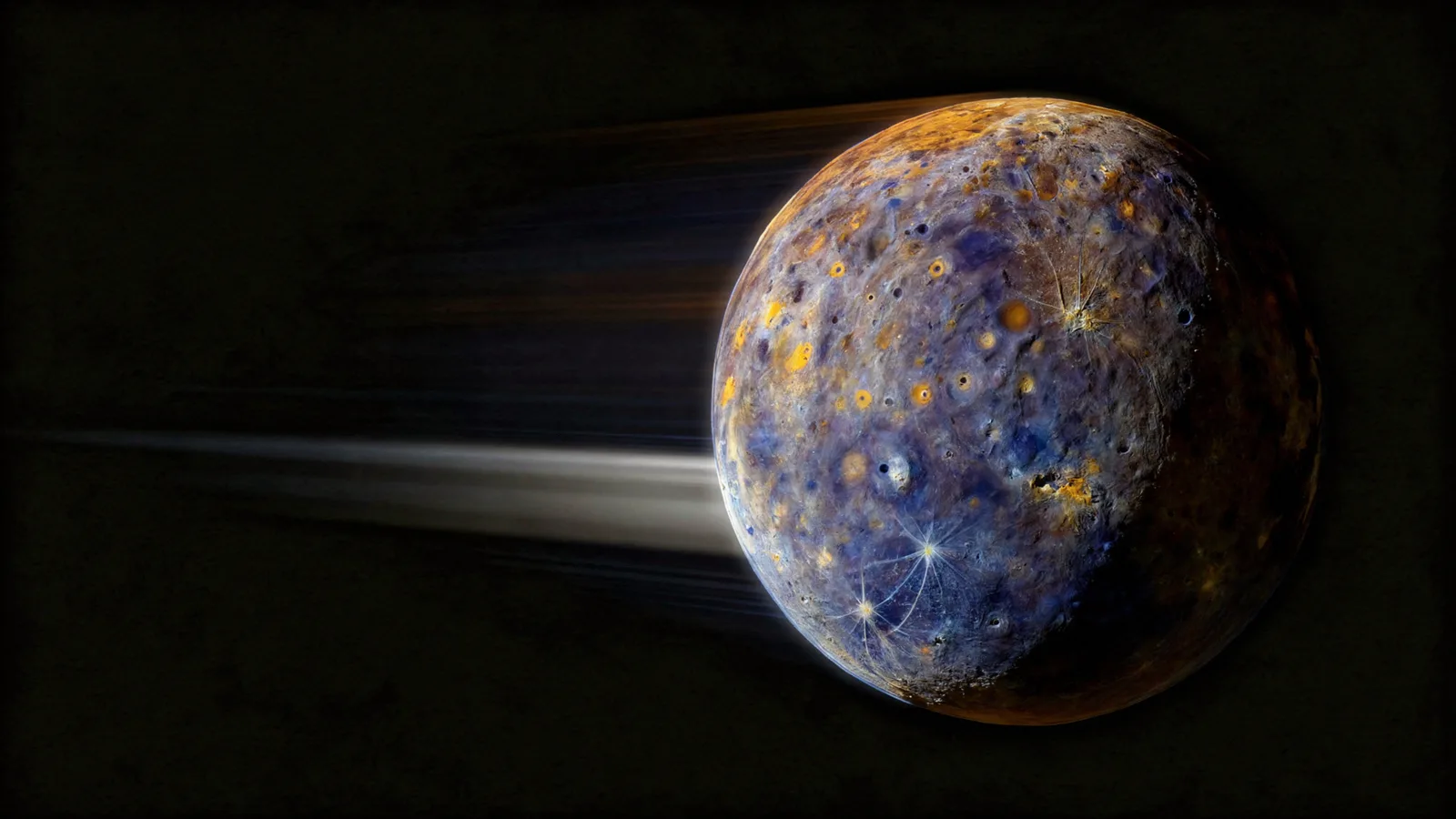
Mercury retrograde receives the most attention because Mercury governs communication, commerce, travel, and technology in astrological tradition — domains where disruptions are immediately noticeable. Mercury retrogrades three to four times per year, making it the most frequent retrograde cycle among the visible planets.
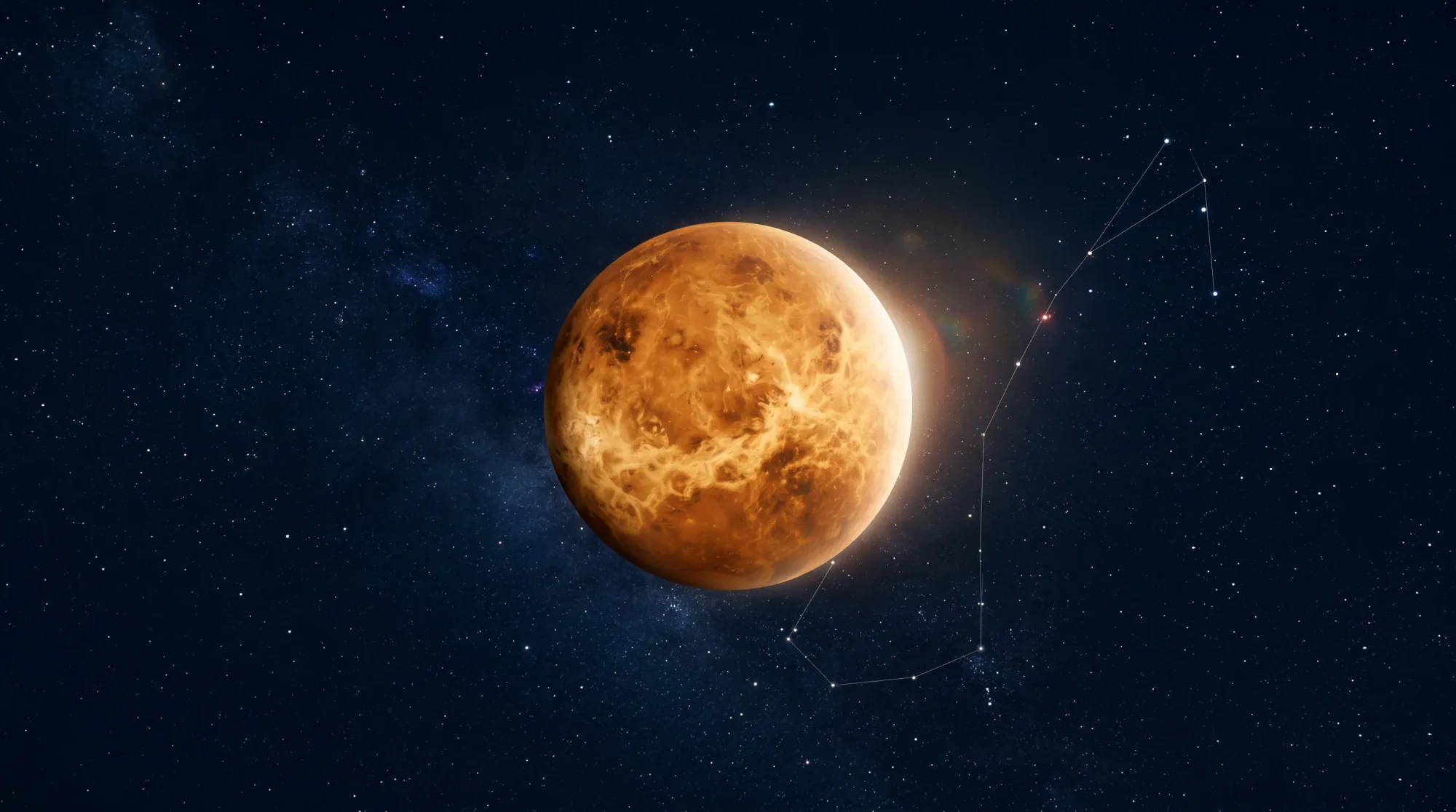
Venus retrograde occurs roughly every nineteen months and lasts about six weeks. Venus traces a pentagram pattern in the sky over eight years, stationing at five points separated by 72°. Symbolically, Venus retrograde is associated with the reassessment of relationships, values, and aesthetic choices. Marriages and major purchases are traditionally advised against during this period — though how seriously one takes that advice is, of course, a personal matter.
Mars retrograde happens every twenty-six months and is the rarest among the personal planets. Mars symbolizes drive, assertiveness, and conflict. Its retrograde period is traditionally associated with frustrations in direct action — projects stall, confrontations feel unproductive, physical energy may redirect inward.
Jupiter and Saturn retrograde for roughly four months each year. Because they move slowly, the subjective effect of their retrogrades is less dramatic but more sustained. Jupiter retrograde is read as a period of internal growth rather than external expansion. Saturn retrograde is associated with revisiting responsibilities, commitments, and structures.
Uranus, Neptune, and Pluto spend such a large percentage of the year in retrograde that their retrograde periods are considered generational rather than personal. Their effects, if any, are read as collective rather than individual — background processes rather than acute events.
Retrograde in the natal chart
A planet retrograde at the moment of birth is read differently from a planet that goes retrograde by transit. In a natal chart, a retrograde planet is considered to express its significations more inwardly.
A natal Mercury retrograde, for instance, is sometimes associated with a thinking style that processes internally before speaking, or with a tendency to revisit and revise ideas more than average. A natal Venus retrograde may suggest someone whose relationship to love, beauty, or values operates on a private logic that others do not immediately understand.
These interpretations are speculative by nature. Given that 19% of the population has Mercury retrograde and over 40% has Pluto retrograde, retrograde status alone is not a defining feature of a chart. It is one consideration among many, weighted by the planet's overall condition — its sign, house, and aspects.
What retrograde does not do
Retrograde planets do not break phones, cancel flights, or ruin relationships. The correlation between Mercury retrograde periods and communication failures has not been established empirically. What has been established is that confirmation bias — the tendency to notice events that confirm a belief and ignore those that do not — is remarkably powerful.
If you believe Mercury retrograde causes problems, you will notice every delayed email and forgotten appointment during those three weeks. You will not notice the dozens of messages that arrived on time, or the contracts that went through without difficulty.
This does not mean the astrological tradition is worthless. It means the tradition is interpretive, not causal. The value of tracking retrogrades — if one chooses to — is as a rhythmic framework for reflection, not as a forecast of dysfunction. What needs revisiting? What was left incomplete? What conversation was started but never finished? These are useful questions regardless of what Mercury is doing.
Frequently asked questions
Do all planets go retrograde?
All planets except the Sun and Moon. The Sun is the center of the system (its apparent motion is produced by Earth's orbit, not by overtaking), and the Moon orbits Earth directly. Every other body from Mercury to Pluto retrogrades regularly.
How often is Mercury retrograde?
Three to four times per year, for approximately three weeks each time. This means Mercury is retrograde roughly 19% of the time — nearly one day in five.
Is being born during a retrograde bad?
No. Given how frequently outer planets retrograde (Pluto spends 44% of its time retrograde), the majority of people have at least one retrograde planet in their natal chart. A retrograde natal planet is simply read as expressing its qualities more internally.
Should I avoid signing contracts during Mercury retrograde?
This is a common piece of astrological advice. If you find the framework useful, it may prompt you to review contracts more carefully — which is good practice regardless. There is no empirical evidence that contracts signed during Mercury retrograde are more likely to fail.
What is a retrograde shadow or retrograde zone?
The degrees of the zodiac that a planet covers during its retrograde cycle, traversed three times: once forward before the retrograde, once backward during it, and once forward after. Some astrologers read the shadow periods as part of the retrograde's influence; others consider only the retrograde itself significant.
See which planets are currently retrograde: Today's sky
Continue reading: Mercury retrograde is not what you think · The Sun in the natal chart · Glossary
Continue reading

Newsletter
A short reading once a month, in your inbox.
A note on the symbolism of the season, recent editorial pieces, and what to look for in next month's sky. No predictions.
Support this project
Independent, no venture funding, no ads. A contribution keeps Astrian precise and free.
Support on Ko-fi (opens in new tab)