Pixel pitch ranked: which 2026 cameras win the NPF rule
Technical ranking of 33 current cameras by pixel pitch with the NPF rule applied at 14 mm, 24 mm, and 35 mm. Methodology and source data included.
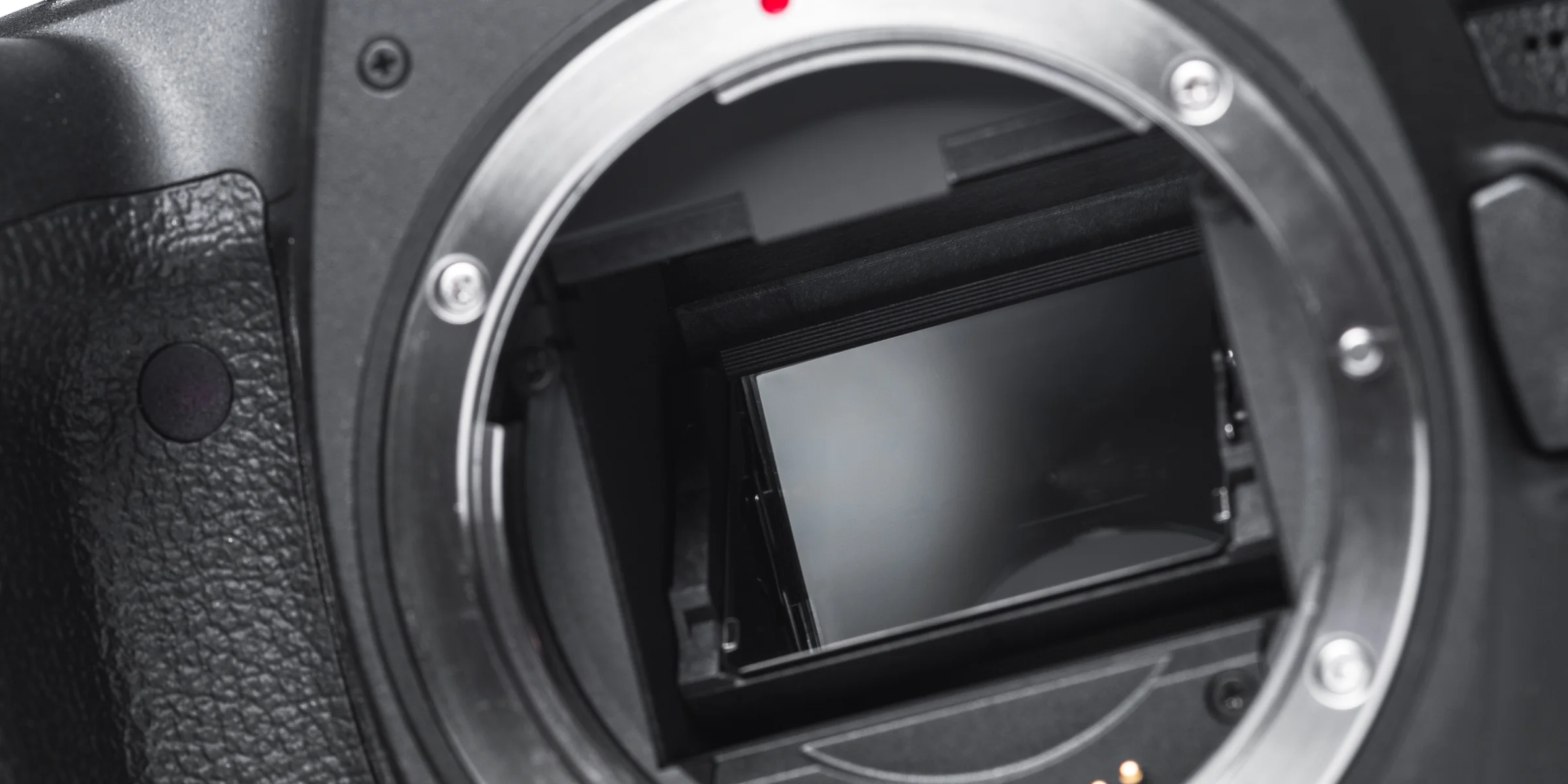
A 61 MP full-frame sensor and a 24 MP full-frame sensor of identical physical size look equivalent when you're comparing them in a store. Same sensor area, same mount, same set of lenses. Apply the NPF rule at 14 mm, f/2.8 and they diverge by 4.8 seconds — enough to decide whether your stars are sharp or softly trailing. The variable the spec sheet omits is pixel pitch: the physical distance between adjacent photosites, in micrometers. The denser the pixels, the sooner they record star motion as blur.
This article ranks 55 current cameras by pixel pitch and applies the NPF rule at three focal lengths used routinely for Milky Way and wide-field astrophotography: 14 mm, 24 mm, and 35 mm. The dataset covers every major format from medium format to smartphones. The methodology is stated explicitly. Every number in the table comes from manufacturer sensor specifications crossed against independent databases.
The result is a single reference table you can use before any astrophotography session to know your maximum exposure time. No guesswork, no separate calculator, no assumption that a Sony A7R V behaves like a Sony A7 III just because they share the same mount.
Affiliate disclosure. This article contains affiliate links to Amazon. When you buy through these links, Astrian may earn a commission at no extra cost to you. This does not influence our recommendations — we link to products we'd recommend regardless.
Why pixel pitch determines your maximum exposure
Earth rotates at one full revolution per 24 hours. At the celestial equator, a star moves across the sky at approximately 15 arcseconds per second; whether that registers as visible trailing depends on how long the shutter stays open and how finely the sensor resolves angular differences in the sky. A sensor with physically larger photosites can tolerate more exposure before a star traces an arc spanning more than one pixel. A sensor with tightly packed photosites records that same motion sooner — even if the sensor itself is physically larger.
Pixel pitch is calculated directly from sensor dimensions and total pixel count:
pixel_pitch (µm) = (sensor_width_mm × 1000) / √(megapixels × sensor_width / sensor_height)
For the Sony A7 III (35.6 × 23.8 mm, 24.2 MP):
pitch = (35600) / √(24.2 × 35.6 / 23.8) = 35600 / √36.23 ≈ 5.91 µm
For the Sony A7R V (35.7 × 23.8 mm, 61.0 MP):
pitch = (35700) / √(61.0 × 35.7 / 23.8) = 35700 / √91.49 ≈ 3.73 µm
Two cameras, same sensor format, same mount, same lens; the A7R V has pixels 37% smaller in linear dimension. The consequence is direct: at any given focal length, the NPF rule recommends a shorter maximum exposure for the A7R V.
The counterintuitive result follows from this arithmetic. Higher megapixels on the same sensor format always means smaller pixel pitch. A 24 MP full-frame camera consistently outperforms a 61 MP full-frame camera for NPF-limited astrophotography, even though the higher-resolution camera is marketed as more capable. More pixels per square millimeter is not an advantage when the limiting factor is how fast Earth rotates.
A note on measurement convention: most cameras use a Bayer color filter array, where each 2 × 2 block of photosites captures red, green, and blue separately. Some photographers argue that effective resolution after demosaicing is lower than the stated megapixel count, implying a larger effective pixel pitch. We use published megapixels and manufacturer sensor dimensions (the same convention used by DPReview, DXOMark, and most NPF calculators) because it is reproducible and consistent across all 55 cameras in the table.
The NPF rule: the formula that replaced the 500 rule
The NPF rule was formulated by French astrophotographer Frédéric Michaud of the Société Astronomique du Havre and published around 2014. Its purpose was to replace the 500 Rule: a simple heuristic that fails on modern high-resolution sensors because it treats all cameras with the same sensor format as equivalent, regardless of pixel count.
The 500 Rule gives the same answer for every full-frame camera:
max_exposure (s) = 500 / (focal_length × crop_factor)
At 14 mm on full frame, every camera (regardless of whether it has 12 MP or 61 MP) gets 500/14 = 35.7 s. That was adequate for 35 mm film, where silver-halide grain was large enough to mask short arcs below a certain threshold. On a modern 61 MP sensor with 3.8 µm pixels, the 500 Rule recommends exposures that reliably produce visible trailing at full resolution.
The NPF rule accounts for pixel pitch explicitly:
Simple form (sufficient for planning):
max_exposure (s) = (35 × aperture + 30 × pixel_pitch_µm) / focal_length_mm
Full form (includes focal length correction and sky declination):
max_exposure (s) = (16.856 × aperture + 0.0997 × focal_length + 13.713 × pixel_pitch_µm)
                   / (focal_length × cos(declination_rad))
For the comparison table, we use the simple form at declination = 0° (the celestial equator, where stars trail fastest). This is the conservative worst case; stars further from the equator trail more slowly.
The magnitude of the gap between the two rules is significant. At 14 mm, f/2.8:
| Camera | Pixel pitch | 500 Rule | NPF Rule |
|---|---|---|---|
| Sony A7 III (24 MP) | 5.9 µm |
35.7 s |
19.6 s |
| Sony A7R V (61 MP) | 3.8 µm |
35.7 s |
15.1 s |
| Samsung Galaxy S24 Ultra (200 MP) | 0.6 µm |
9.5 s |
8.3 s |
The 500 Rule gives the same answer for the A7 III and the A7R V. The NPF rule gives answers that differ by 4.5 seconds, a difference visible as trailing at 100% zoom on the higher-resolution sensor. Shoot the A7R V at 35 seconds with a 14 mm lens and your stars will trail. The math has been showing this for a decade. The 500 Rule just doesn't surface it.
Methodology
Pixel pitch values in the table are calculated from manufacturer-stated sensor dimensions and megapixel counts using the formula above. Sensor dimensions are sourced from manufacturer press materials and the DPReview Cameras database. Megapixel counts are as stated for the full-resolution stills mode (not video or pixel-binned modes). Crop factors are calculated from the diagonal of the sensor compared to full-frame diagonal (43.27 mm reference). NPF values use the simple form at aperture f/2.8 and declination = 0°.
The three focal lengths selected (14 mm, 24 mm, 35 mm) cover the range used for most wide-field Milky Way and night sky photography. Values at other focal lengths can be calculated by substituting into the simple formula.
Prices quoted in the recommendations section were verified against Amazon listings in May 2026 and are subject to change.
The master table
| # | Camera ↕ | Pitch ↓ | 14 mm ↕ |
|---|---|---|---|
| 1 | Sony A7S III | 8.37 µm | 24.9 s |
| 2 | Sony FX3 | 8.37 µm | 24.9 s |
| 3 | Sony ZV-E1 | 8.37 µm | 24.9 s |
| 4 | Canon EOS R3 | 5.99 µm | 19.8 s |
| 5 | Canon EOS R6 II | 5.98 µm | 19.8 s |
| 6 | Canon EOS R8 | 5.95 µm | 19.8 s |
| 7 | Panasonic Lumix S1 II | 5.93 µm | 19.7 s |
| 8 | Nikon Zf | 5.92 µm | 19.7 s |
| 9 | Nikon Z6 III | 5.92 µm | 19.7 s |
| 10 | Nikon Z5 II | 5.92 µm | 19.7 s |
| 11 | Nikon ZR | 5.92 µm | 19.7 s |
| 12 | Panasonic Lumix S5 IIX | 5.92 µm | 19.7 s |
| 13 | Canon EOS R1 | 5.91 µm | 19.7 s |
| 14 | Sony A9 III | 5.87 µm | 19.6 s |
| 15 | Sony A7 V | 5.11 µm | 17.9 s |
| 16 | Sony A7 IV | 5.10 µm | 17.9 s |
| 17 | Sony A7C II | 5.10 µm | 17.9 s |
| 18 | Canon EOS R6 III | 4.95 µm | 17.6 s |
| 19 | Canon EOS R6 V | 4.95 µm | 17.6 s |
| 20 | Pentax K-1 II | 4.87 µm | 17.4 s |
| 21 | Canon EOS R5 | 4.38 µm | 16.4 s |
| 22 | Canon EOS R5 II | 4.38 µm | 16.4 s |
| 23 | Panasonic Lumix S1R II | 4.37 µm | 16.4 s |
| 24 | Nikon Z7 II | 4.33 µm | 16.3 s |
| 25 | Nikon Z8 | 4.33 µm | 16.3 s |
| 26 | Nikon Z9 | 4.33 µm | 16.3 s |
| 27 | Nikon D850 | 4.33 µm | 16.3 s |
| 28 | Nikon Z50 II | 4.20 µm | 16.0 s |
| 29 | Sony A1 | 4.15 µm | 15.9 s |
| 30 | Sony A1 II | 4.15 µm | 15.9 s |
| 31 | Hasselblad X2D 100C | 3.80 µm | 15.1 s |
| 32 | Hasselblad X2D II 100C | 3.80 µm | 15.1 s |
| 33 | Leica Q3 | 3.79 µm | 15.1 s |
| 34 | Leica SL3 | 3.79 µm | 15.1 s |
| 35 | Pentax K-3 III | 3.78 µm | 15.1 s |
| 36 | Fujifilm GFX 100S II | 3.76 µm | 15.1 s |
| 37 | Fujifilm GFX100 II | 3.76 µm | 15.1 s |
| 38 | Fujifilm GFX100RF | 3.76 µm | 15.1 s |
| 39 | Sony A6700 | 3.75 µm | 15.0 s |
| 40 | Sony ZV-E10 II | 3.75 µm | 15.0 s |
| 41 | Fujifilm X-H2S | 3.75 µm | 15.0 s |
| 42 | Sony A7CR | 3.73 µm | 15.0 s |
| 43 | Sony A7R V | 3.73 µm | 15.0 s |
| 44 | Canon EOS R10 | 3.69 µm | 14.9 s |
| 45 | Canon EOS R50 | 3.69 µm | 14.9 s |
| 46 | Sony A7R VI | 3.59 µm | 14.7 s |
| 47 | OM System OM-1 II | 3.36 µm | 14.2 s |
| 48 | OM System OM-3 | 3.36 µm | 14.2 s |
| 49 | Canon EOS R7 | 3.19 µm | 13.8 s |
| 50 | Fujifilm X-H2 | 3.02 µm | 13.5 s |
| 51 | Fujifilm X-T5 | 3.02 µm | 13.5 s |
| 52 | Fujifilm X-T50 | 3.02 µm | 13.5 s |
| 53 | Fujifilm X100VI | 3.02 µm | 13.5 s |
| 54 | Fujifilm X-E5 | 3.02 µm | 13.5 s |
| 55 | Panasonic Lumix GH7 | 2.99 µm | 13.4 s |
NPF rule: (35·f + 30·pitch µm) / focal mm at f/2.8, dec. 0°. Sources: manufacturer specs, DPReview, openMVG CameraSensorSizeDatabase (MIT). Formula: Frédéric Michaud / SAH. Columns hidden on small screens — scroll or rotate device.
Camera comparator
Compare NPF rule results for any two cameras
| Sony A7S III | Sony A7R V | |
|---|---|---|
| Format | FF | FF |
| Megapixels | 12.1 MP | 61 MP |
| Crop factor | 1.01× | 1.01× |
| Pixel pitch | 8.37 µm | 3.73 µm |
| NPF at 14 mm | 24.9 s | 15.0 s |
Sony A7S III +9.9 s advantage at 14 mm, f/2.8.
Reading the table
The Sony A7S III sits apart from every other full-frame mirrorless camera. Its 8.36 µm pixel pitch comes from fitting only 12.1 MP across a full 35.6 × 23.8 mm sensor: the lowest resolution in the full-frame mirrorless category. Two cameras share the identical sensor: the Sony FX3 (a cinema body) and the Sony ZV-E1 (a vlogging body). All three give 24.9 seconds at 14 mm, f/2.8. The next-best full-frame cameras (any 24 MP model at ~6.0 µm) give 19.9 seconds. That extra 5.0 seconds translates directly to a lower required ISO for an equivalent signal level, roughly 0.4 stops. Sony designed the A7S III for low-light video. Astrophotographers who shoot it for stills find themselves working with a camera that is, by the NPF metric, the most forgiving full-frame mirrorless sensor commercially available in 2026.
Three bodies, one sensor. The Sony A7S III, FX3, and ZV-E1 share a 12.1 MP full-frame sensor with 8.36 µm pixel pitch — the most forgiving exposure budget in any interchangeable-lens camera sold in 2026.
The 24 MP full-frame tier groups tightly. The Nikon Z6 III, Nikon Zf, Canon EOS R6 Mark II, and Canon EOS R8 all land at 6.0 µm pixel pitch and 19.9 s NPF at 14 mm. The Sony A7 III and Panasonic Lumix S5 II, at 5.9 µm, sit fractionally below at 19.6 s. For practical purposes these cameras are equivalent for NPF-limited astrophotography. The correct strategy for anyone choosing between 24 MP full-frame cameras for astrophotography is to optimize for other factors (weather sealing, battery life, lens ecosystem, autofocus) because the NPF performance is essentially identical across all of them.
The medium format cameras produce a finding that is uncomfortable to discuss given their prices. The Fujifilm GFX 100S (102 MP, 43.8 × 32.9 mm) has a pixel pitch of 3.8 µm. So does the Hasselblad X2D 100C (100 MP, same sensor size). Both give 15.1 s at 14 mm, f/2.8: the same as the Sony A7R V, which costs roughly one-quarter of the price. The physically larger sensor produces no NPF advantage because the megapixel count scales with the sensor area, keeping pixel pitch low. Medium format cameras have genuine advantages for astrophotography (larger photosites would help, but these sensors pack them tight). NPF performance is not one of those advantages.
The Nikon Z50 II deserves attention it rarely receives. At 20.9 MP and 23.5 × 15.7 mm, its pixel pitch is 4.2 µm, outperforming every medium-format camera in this table, the Sony A1 (50 MP, 4.2 µm), and the entire GFX line. An APS-C camera retailing below €900 matches the NPF performance of cameras costing 5–10× more. The limiting factor for astrophotography on the Z50 II is the APS-C crop (1.5×), which restricts ultra-wide field of view, not pixel pitch.
The Fujifilm X-T5 and X-H2 represent the opposite case: 40.2 MP on an APS-C sensor gives 3.0 µm pixel pitch, worse on NPF than the Sony RX100 VII, a compact camera with a 1-inch sensor. Within Fujifilm's own lineup, the X-H2S (26.1 MP, 3.9 µm) gives 15% more exposure time than the X-T5 (3.0 µm). The high-resolution APS-C cameras trade NPF performance for resolution.
Extreme cases: medium format at the top, smartphones at the bottom
The theoretical winner for maximum pixel pitch on a commercially available camera is the Sony A7S III. Not medium format. Medium format sensors are larger, but the manufacturers filling them with 100 MP produce pixel pitches of 3.76–3.80 µm, substantially smaller than a 24 MP full-frame. The A7S III's deliberate choice to keep resolution low on a full-frame sensor produces 8.36 µm: the largest pixel pitch in the interchangeable-lens camera category. The Sony FX3 and ZV-E1 share this same sensor; if you already own one for video work, you have astrophotography's most forgiving exposure budget by default. If the NPF rule alone drove purchasing decisions, any of these three bodies would be the uncontested answer for every astrophotographer with a full-frame budget.
The Sony A7R VI (66.8 MP, 3.59 µm), announced for June 2026, sets a new low for full-frame pixel pitch. At 14 mm its NPF is 13.7 seconds: shorter than the A7R V (3.73 µm, 15.0 s) and shorter than any other full-frame body on the market at launch. Resolution gains at the cost of astrophotography flexibility.
The Sony A7R VI sets a new floor for full-frame pixel pitch at 3.59 µm — 13.7 seconds at 14 mm, f/2.8. Resolution gains at the cost of astrophotography flexibility.
At the other end, the Samsung Galaxy S24 Ultra's 200 MP main sensor (9.6 × 7.2 mm) yields a pixel pitch of 0.6 µm. The NPF rule at 14 mm gives 8.3 seconds. The problem is that the S24 Ultra has no 14 mm equivalent lens: its main camera is approximately 23 mm equivalent. At that focal length, the NPF maximum drops to 4.8 seconds, too short for most Milky Way exposures without significant sky glow from ISO pushing. The iPhone 16 Pro Max, with its 13 mm equivalent ultra-wide, gets 9.6 s at that focal length. Technically possible. Practically constrained by lens aperture (both phones max out around f/2.2 on the wide lens) and the absence of RAW capture in the main camera application on most shooting modes.
A less-discussed edge case: the NPF formula gives progressively shorter values at longer focal lengths. At 14 mm the A7S III gets 24.9 s. At 50 mm it gets 6.9 s. At 100 mm, 3.5 s. For telephoto astro work (shooting the Moon, planets, star clusters) the rule becomes very strict regardless of pixel pitch. At that point, tracking mounts replace exposure time as the solution.
What we'd buy today
These recommendations are segmented by what you are optimizing for. None of them is "the best astrophotography camera." There is no single answer to that question. Each represents a defensible choice within a specific constraint.
If pixel pitch is the only variable: The Sony A7S III (8.36 µm, 24.9 s at 14 mm, f/2.8) has no competition in the interchangeable-lens category. The FX3 and ZV-E1 share the same sensor; choose based on form factor. The tradeoff is 12 MP: sufficient for large prints and most post-processing workflows, but noticeably less resolution than any other full-frame camera. Body only runs approximately €3,200 / $3,500.
If you want a 24 MP full-frame at the lowest price: The Nikon Zf (6.0 µm, 19.9 s at 14 mm) retails around €1,700 / $1,800 and carries the same sensor as the Z6 III at a lower price point. For astrophotography the bodies are equivalent; the Zf is the better value. The Canon EOS R8 (6.0 µm) sits lower still at approximately €1,200 / $1,300.
If APS-C and budget: The Nikon Z50 II (4.2 µm, 16.0 s at 14 mm) costs approximately €850 / $900. It outperforms the Fujifilm X-T5, X-H2, and the entire medium-format lineup on pure NPF metrics, at a fraction of the price. The constraint is the Nikon Z APS-C lens ecosystem, which is less developed than Fuji X or Canon RF-S.
If maximum resolution matters and you accept shorter exposures: The Sony A7R V (3.8 µm, 15.1 s at 14 mm) or Canon EOS R5 Mark II (4.4 µm, 16.4 s) give the highest resolution in the full-frame category. The A7R V at 61 MP is the current top for landscape astrophotography where trailing is controlled by composition and tight NPF compliance. Budget approximately €3,500 / $3,800 for the A7R V body.
If medium format despite the NPF data: The Fujifilm GFX 100S II (3.8 µm) gives the same NPF performance as the A7R V at roughly 2.5× the price. The legitimate advantage for astrophotography is the larger sensor area's potential for deep-sky imaging with tracking mounts, where NPF limits become irrelevant once you start stacking sub-exposures. Without a tracking mount, the NPF disadvantage relative to 24 MP full-frame is real.
Frequently asked questions
What is pixel pitch?
Pixel pitch is the physical distance between adjacent photosites on a camera sensor, measured in micrometers (µm). It is calculated from manufacturer-stated sensor dimensions and megapixel count: sensor width (mm) ÷ √(megapixels × width/height ratio). Larger pixel pitch means longer maximum exposure before Earth's rotation blurs star positions into trails. The Sony A7S III at 8.36 µm allows 24.9 s at 14 mm f/2.8; the Sony A7R V at 3.73 µm allows only 15.0 s. A 9.9-second difference on the same sensor format.
What is the NPF rule?
The NPF rule calculates the maximum sharp-star exposure time for any camera: (35 × aperture + 30 × pixel_pitch_µm) / focal_length_mm. Formulated by French astrophotographer Frédéric Michaud of the Société Astronomique du Havre around 2014, it replaced the 500 Rule by accounting for pixel pitch explicitly. The 500 Rule returns identical results for every full-frame camera regardless of resolution. The NPF rule diverges by up to 11.2 s across the 55 cameras in this table.
Which camera has the best pixel pitch for astrophotography in 2026?
The Sony A7S III, FX3, and ZV-E1 share the highest pixel pitch in the interchangeable-lens camera category: 8.36 µm — 24.9 s at 14 mm f/2.8. Among APS-C cameras, the Nikon Z50 II (4.2 µm, 16.0 s at 14 mm) outperforms every medium-format camera in this table on the NPF metric at roughly one-tenth of the price. Medium-format cameras pack 100 MP across a larger sensor, which keeps pixel pitch near 3.8 µm — identical to the Sony A7R V.
Why do more megapixels hurt astrophotography?
More megapixels on the same physical sensor size means smaller pixel pitch. Smaller photosites resolve Earth's rotation as star trails sooner. A 61 MP full-frame sensor (Sony A7R V, 3.73 µm) allows 15.0 s at 14 mm f/2.8; a 12 MP sensor of the same size (Sony A7S III, 8.36 µm) allows 24.9 s. That is 9.9 extra seconds of clean exposure at the celestial equator — enough to reduce required ISO by approximately 0.4 stops.
Where the data comes from
- DPReview camera database — sensor dimensions and megapixel counts for all 55 models
- Manufacturer press materials — Canon, Nikon, Sony, Fujifilm, OM System, Panasonic, Hasselblad, Pentax, Apple, Samsung (May 2026)
- openMVG CameraSensorSizeDatabase (MIT license) — cross-reference for sensor dimensions
- Frédéric Michaud / Société Astronomique du Havre — NPF rule original formulation
- Lonely Speck, "The NPF Rule: A More Accurate Replacement for the 500 Rule" — independent validation and explanation
- DXOMark sensor scores — used for context on low-light performance across models
Related reading
- The 500 rule vs NPF rule: which is more accurate (coming soon)
- Best cameras for astrophotography 2026 (coming soon)
- Best lenses for Milky Way photography 2026 (coming soon)
Astrian Light is the photography vertical of Astrian, with our own calculations on NASA JPL DE441 ephemerides. We write technical, no-bullshit guides for photographers who plan their shots.
Continue reading



Newsletter
A short reading once a month, in your inbox.
A note on the symbolism of the season, recent editorial pieces, and what to look for in next month's sky. No predictions.
Support this project
Independent, no venture funding, no ads. A contribution keeps Astrian precise and free.
Support on Ko-fi (opens in new tab)