PROFILE · VISUAL ARTS
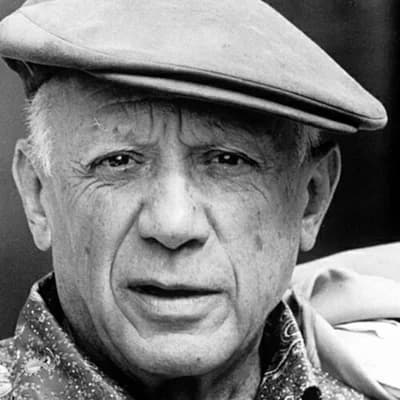
Pablo Picasso
Pablo Diego José Francisco de Paula Juan Nepomuceno Crispín Crispiniano María Remedios de la Santísima Trinidad Ruiz Picasso
painter and sculptor
Born 25 October 1881 · Málaga, Andalusia, Spain · 36.72° N, 4.42° WX
Source: Birth time not documented in publicly accessible records
About this chart
No birth time is documented for this person. The chart therefore shows planetary positions in their signs, the slow aspects between them, and the generational context — but not house placements, the Ascendant, or the Midheaven, which require an accurate birth time. The Moon's sign carries a ±6° margin: if it falls near a sign boundary, the sign could vary. Positions for all other planets are reliable.
Do you have a verified source for this birth time? Share it →
The sky at birth
No birth time is documented for Pablo Picasso. The Ascendant, Midheaven, and house positions cannot be determined. The planetary positions below are calculated for noon local time and are accurate to within a fraction of a degree for the slow-moving planets. The Moon's position carries a margin of approximately ±7°.
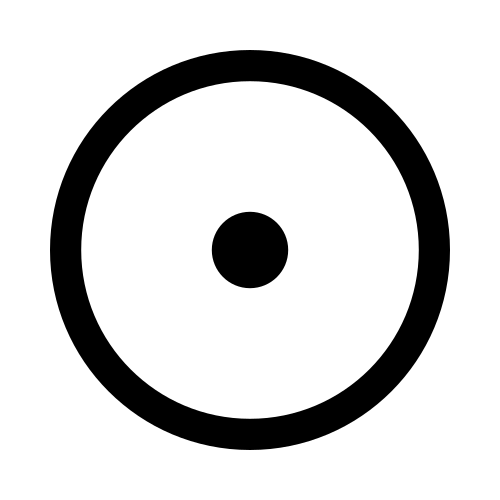
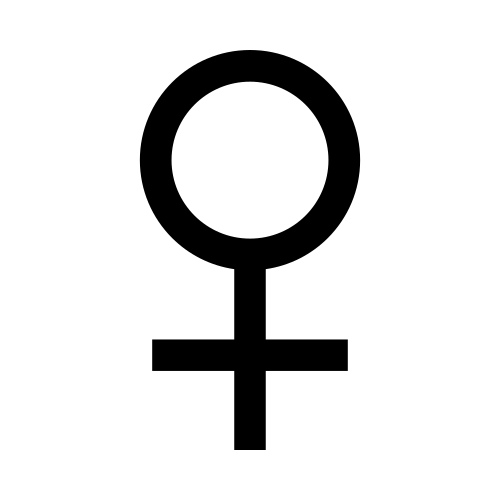
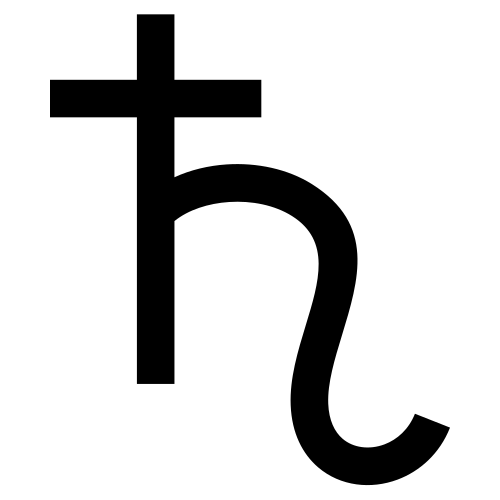
The Sun is at 2°13' Scorpio. The Moon is at 1°41' Sagittarius (noon position, ±7° margin). Mercury is at 24°06' Scorpio. Venus is at 3°56' Libra. Mars is at 12°13' Cancer. Jupiter is at 23°36' Taurus R. Saturn is at 9°29' Taurus R. Uranus is at 17°00' Virgo. Neptune is at 15°31' Taurus R. Pluto is at 28°47' Taurus R.
Mercury at 24°06' Scorpio opposes Jupiter at 23°36' Taurus retrograde (0°30') — the tightest major aspect in the chart. Uranus at 17°00' Virgo trines Neptune at 15°31' Taurus retrograde (1°29'). The Moon at 1°41' Sagittarius sextiles Venus at 3°56' Libra (2°15'), though this aspect carries the Moon's ±7° uncertainty. Mars at 12°13' Cancer sextiles Saturn at 9°29' Taurus retrograde (2°44'). The Moon opposes Pluto at 28°47' Taurus retrograde (2°54'), also under the Moon's uncertainty. Mars sextiles Neptune at 15°31' Taurus retrograde (3°18'). Mercury at 24°06' Scorpio opposes Pluto at 28°47' Taurus retrograde (4°41'). Mars sextiles Uranus at 17°00' Virgo (4°47'). Venus at 3°56' Libra trines Pluto at 28°47' Taurus retrograde (5°09'). Jupiter at 23°36' Taurus retrograde conjoins Pluto (5°11').
The engine also identifies the following tight minor aspects involving asteroids and calculated points: sun semi-square uranus (0.22° sep); mercury opposition jupiter (0.49° sep); sun semi-sextile moon (0.55° app); neptune square lilith (1.03° app).
The tightest major aspects between planets: Mercury opposition Jupiter (0°30'), Uranus trine Neptune (1°29'), Moon sextile Venus (2°15'), Mars sextile Saturn (2°44'), Moon opposition Pluto (2°54'), Mars sextile Neptune (3°18'), Mercury opposition Pluto (4°41'), Mars sextile Uranus (4°47'), Venus trine Pluto (5°09'), Jupiter conjunct Pluto (5°11').
Note on the Moon's sign: The Moon at 1°41' Sagittarius at noon is near the Scorpio-Sagittarius boundary. If born early in the day, the Moon could have been in late Scorpio. The Moon's sign placement in Sagittarius is probable but not certain for the entire day.
The chart was calculated by Astrian's engine using NASA JPL DE441 ephemerides, sub-arcsecond precision. Timezone: Europe/Madrid (Local Mean Time, UTC −0:18).
| Planet | Sign | Position |
|---|---|---|
| Sun | Scorpio | 02°14' |
| Moon | Sagittarius | 01°49'±6° |
| Mercury | Scorpio | 24°06' |
| Venus | Libra | 03°56' |
| Mars | Cancer | 12°13' |
| Jupiter | Taurus | 23°36'retrograde |
| Saturn | Taurus | 09°29'retrograde |
| Uranus | Virgo | 17°00' |
| Neptune | Taurus | 15°31'retrograde |
| Pluto | Taurus | 28°47'retrograde |
 Sun
Sun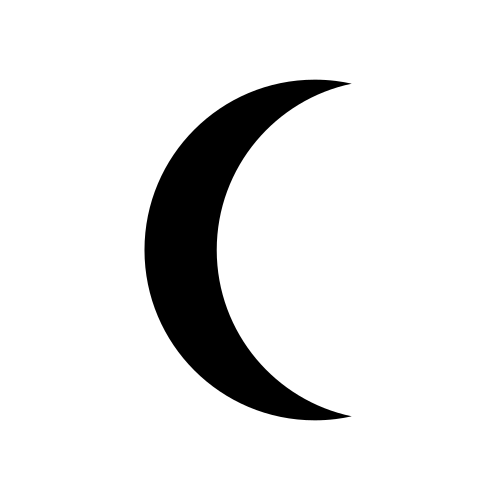 Moon
Moon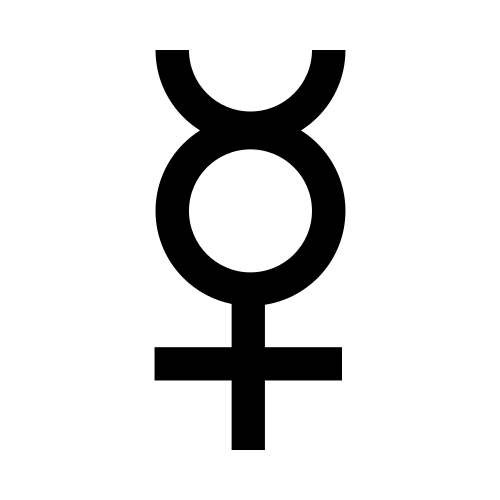 Mercury
 Venus
Venus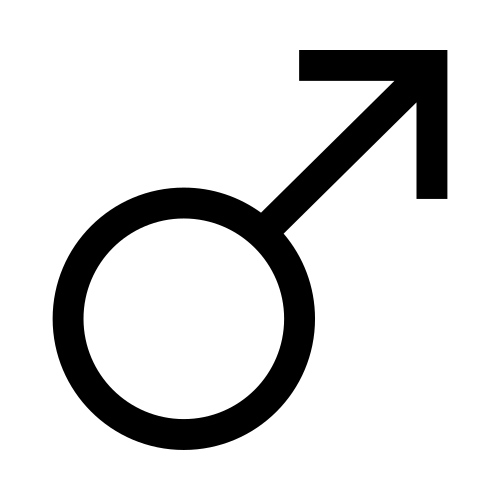 Mars
Mars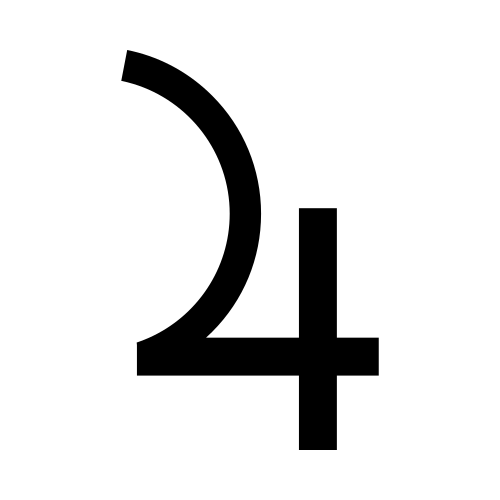 Jupiter
 Saturn
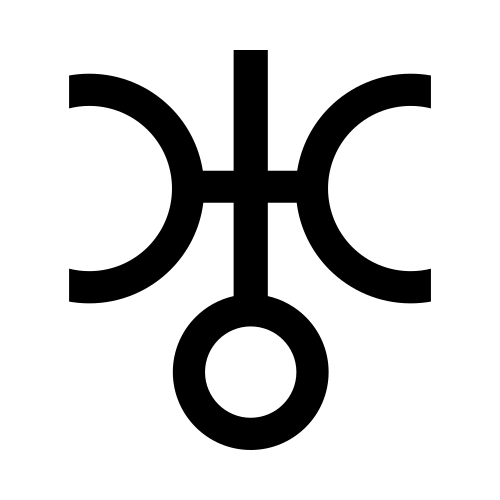 Uranus
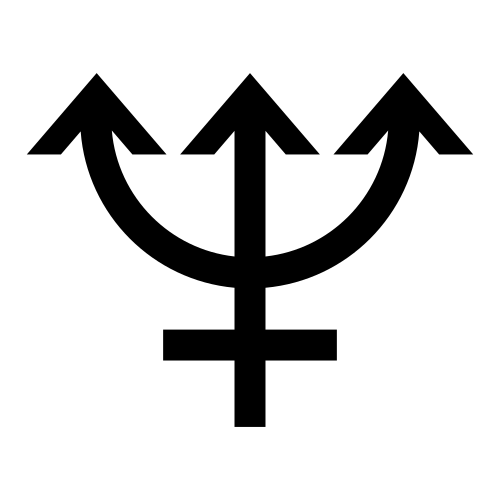 Neptune
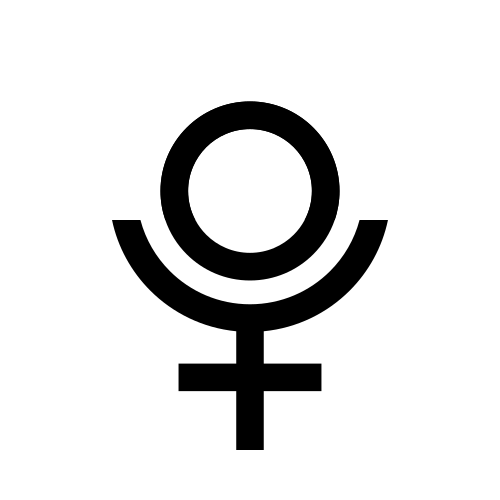 Pluto
PlutoBirth time unknown — house positions and Ascendant/MC are not available.
Astronomical context
Those born between approximately 1852 and 1884 carried Pluto in Taurus. This generation grew up inside the industrialization of the material world — the restructuring of agriculture, the rise of industrial capitalism, the transformation of mass labour, and the systematic exploitation of raw materials that produced the wealth of the Belle Époque and the colonial empires that sustained it.
In astrological tradition, Pluto in Taurus is associated with collective transformation of the domains that sign governs: material value, property, the physical body, the earth itself, and the slow accumulation of what endures. Taurus is the sign of the builder, of the one who makes what can be touched and possessed. Pluto's transit through Taurus coincided with the rise of industrial monopolies, the gold standard debates, the enclosure of common lands, and the first mass movements demanding that material value be distributed rather than hoarded. The symbolic reading is correlative, not causal.
Other profiles in the Astrian collection born under this configuration include Sigmund Freud (1856) and Helen Keller (1880). Pablo Picasso, born in 1881, belongs to the final years of this generational wave.
Other profiles from this Pluto in Taurus generation
Symbolic reading
The following describes what classical astrological tradition associates with these configurations. Astrian does not apply these descriptions to the person's biography.
The Sun at 2°13' Scorpio is the most prominent structural feature of this chart. Without a documented birth time, there is no Ascendant or Midheaven — the reading is confined to planetary positions by sign and the aspects between planets.
The Moon at 1°41' Sagittarius represents the noon position; the actual placement falls within approximately 7° on either side. If born early in the day, the Moon could have been in late Scorpio. Mercury at 24°06' Scorpio, Venus at 3°56' Libra, and Mars at 12°13' Cancer complete the personal planet picture.
The chart's most striking structural feature is the massive concentration in Taurus: Jupiter, Saturn, Neptune, and Pluto all occupy this sign. Four planets — including three of the slowest — clustered in the sign of material value, physical form, and what endures. The Sun and Mercury in Scorpio, the sign opposite Taurus, face this concentration directly. The chart is organized as a confrontation between Scorpio (the faculty that penetrates, transforms, and destroys) and Taurus (the faculty that builds, accumulates, and preserves).
### Mercury opposition Jupiter: the mind that expands
Mercury at 24°06' Scorpio opposes Jupiter at 23°36' Taurus retrograde, orb 0°30' — the tightest major aspect in the chart. Mercury governs communication, information processing, and the patterns by which the mind organizes reality. Jupiter governs expansion, generosity, and the instinct toward the large gesture. The opposition places them in direct confrontation: the communicative faculty faces the expansive one.
Mercury in Scorpio processes through the register of depth — a mind that drives beneath surfaces, that is drawn to what is hidden, forbidden, or concealed. Jupiter in Taurus retrograde expands through the material, the tangible, the physically present. The opposition creates a dialogue between mental depth (Scorpio) and material abundance (Taurus) — a mind that sees more than can be held in a single form, and a productive faculty that insists on giving that vision physical substance.
Mercury also opposes Pluto at 28°47' Taurus retrograde (4°41'), extending the opposition to the transformative depth itself. Mercury faces both Jupiter (expansion) and Pluto (transformation) across the Taurus axis — the mind confronts the full weight of the material world's capacity to expand and to be destroyed.
### The Taurus concentration: Jupiter, Saturn, Neptune, Pluto
Four planets in Taurus create a generational and personal concentration of unusual density. Jupiter at 23°36' conjoins Pluto at 28°47' (5°11') — expansion fused with transformation. Saturn at 9°29' is widely separated from the others but occupies the same sign, adding the structuring faculty to the material register. Neptune at 15°31' — vision, imagination, dissolution of form — also operates through Taurus's insistence on the physical.
Mars at 12°13' Cancer sextiles three of the four Taurus planets: Saturn (2°44'), Neptune (3°18'), and Uranus in Virgo (4°47'). The action faculty in Cancer — protective, instinctive, rooted in feeling — connects cooperatively with the material-structural concentration. The sextiles provide channels through which the Taurus weight can be mobilized into action.
### Venus trine Pluto: beauty drawn to transformation
Venus at 3°56' Libra trines Pluto at 28°47' Taurus retrograde, orb 5°09'. Venus governs value, desire, and the aesthetic sense. In Libra, Venus is in the sign of its traditional rulership — the aesthetic faculty at its most refined, concerned with balance, proportion, and the negotiation between opposing forms. The trine to Pluto connects beauty to transformation without friction — the aesthetic sense has natural access to what is deep, hidden, and powerful.
The Moon at 1°41' Sagittarius (if near its noon position) sextiles Venus (2°15') and opposes Pluto (2°54'), placing the emotional faculty between beauty and transformation — drawn to both, mediating between them.
The planetary pattern here is read as a symbolic portrait, not a causal explanation. No planet caused, predicted, or determined any event or characteristic.
Astrology is a symbolic language with 2,500 years of literature. The reading above is interpretive, not explanatory.
Astrian does not claim that the natal chart of Pablo Picasso caused or determined any of the above. Astrology is a symbolic system with 2,500 years of literature. Its capacity for retrospective description does not imply explanatory capacity.
A parallel life
The following are verified biographical facts. No connection to the natal chart is implied.
Pablo Ruiz Picasso was born on 25 October 1881 in Málaga, the eldest child of José Ruiz Blasco, an art teacher and painter of moderate talent, and María Picasso y López. The family was Andalusian, middle class, and Catholic. His father recognized his son's ability early — according to family tradition, José handed Pablo his brushes when the boy was thirteen, acknowledging that the son had surpassed the father, and never painted again.
He studied at the Barcelona School of Fine Arts (La Llotja) from 1895 and at the Royal Academy of San Fernando in Madrid from 1897, though he found academic instruction stifling and spent more time in the Prado than in the classroom. By 1900, he had moved to Paris — the centre of the art world — where he would live, with interruptions, for most of the next decades.
His Blue Period (1901–1904) — paintings of beggars, prostitutes, the blind, and the destitute, rendered in cold blues and greens — established him as a painter of serious ambition. The Rose Period (1904–1906) lightened the palette but not the emotional register: circus performers, harlequins, the marginal and the itinerant.
In 1907, he painted Les Demoiselles d'Avignon — five nude women in a brothel, their bodies fractured into angular planes, two faces replaced by African masks. The painting was not exhibited publicly until 1916. It was the first act of what became Cubism. Working with Georges Braque from 1908 to 1914, Picasso developed Analytical Cubism (the systematic deconstruction of form into overlapping planes) and Synthetic Cubism (the reassembly of those fragments using collage, text, and mixed materials). The collaboration ended with the First World War.
The scale of his output was without parallel. Over a career of seventy-five years, he produced an estimated 13,500 paintings, 100,000 prints and engravings, 34,000 illustrations, and 300 sculptures and ceramics — more than 50,000 works in total. He worked in oil, watercolour, pastel, ink, charcoal, pencil, gouache, enamel, crayon, and ceramic. He designed ballet sets for Diaghilev. He made assemblages from bicycle parts. He painted on napkins in restaurants and left them as tips.
Guernica (1937) — painted in response to the Nazi bombing of the Basque town during the Spanish Civil War — became the defining anti-war painting of the twentieth century. The canvas measures 3.49 by 7.76 metres. Picasso painted it in five weeks. It toured the world and was housed at the Museum of Modern Art in New York until 1981, when it was returned to Spain after Franco's death.
His personal life was a sequence of consuming relationships. He married Olga Khokhlova, a Russian ballerina, in 1918; they separated in 1935 but never divorced. Marie-Thérèse Walter, Dora Maar, Françoise Gilot, and Jacqueline Roque followed — each relationship producing works, children, or both, and ending in varying degrees of destruction. Gilot was the only one who left him. Walter and Roque died by suicide after his death. His granddaughter Pablito swallowed bleach.
He joined the French Communist Party in 1944 and remained a member until his death, though his political engagement was more symbolic than active. He received the Stalin Peace Prize in 1950 and the Lenin Peace Prize in 1962.
He died on 8 April 1973 in Mougins, France, at the age of ninety-one, still working. Jacqueline Roque barred most of his children and grandchildren from attending the funeral.
Biographical sources
- Richardson, John. A Life of Picasso (4 vols.). Random House, 1991–2021..
- Penrose, Roland. Picasso: His Life and Work. University of California Press 1981
This profile presents the sky at the birth of Pablo Picasso and verified facts of their biography. Astrian does not claim that astrology has predictive capacity or that the natal chart determines the trajectory of a life. Astrology is a symbolic system with 2,500 years of literature. Its capacity for retrospective description does not imply explanatory capacity.
Related profiles
Calculate your own birth chart with the same NASA JPL DE441 precision.
Calculate my birth chartLast updated: June 12, 2026
Newsletter
A short reading once a month, in your inbox.
A note on the symbolism of the season, recent editorial pieces, and what to look for in next month's sky. No predictions.
Support this project
Independent, no venture funding, no ads. A contribution keeps Astrian precise and free.
Support on Ko-fi (opens in new tab)