PROFILE · FILM & STAGE
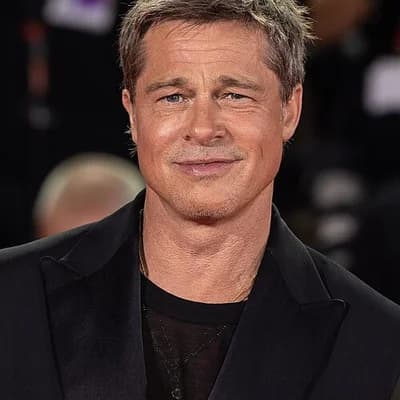
Brad Pitt
William Bradley Pitt
actor
Born 18 December 1963 · Shawnee, Oklahoma, United States · 35.33° N, 96.93° WX
Source: Birth time not documented in publicly accessible records
About this chart
No birth time is documented for this person. The chart therefore shows planetary positions in their signs, the slow aspects between them, and the generational context — but not house placements, the Ascendant, or the Midheaven, which require an accurate birth time. The Moon's sign carries a ±6° margin: if it falls near a sign boundary, the sign could vary. Positions for all other planets are reliable.
Do you have a verified source for this birth time? Share it →
The sky at birth
No birth time is documented for Brad Pitt. The Ascendant, Midheaven, and house positions cannot be determined. The planetary positions below are calculated for noon local time and are accurate to within a fraction of a degree for the slow-moving planets. The Moon's position carries a margin of approximately ±7°.
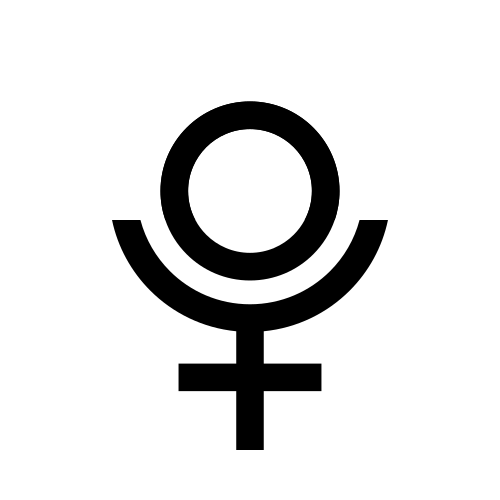
The Sun is at 26°05' Sagittarius. The Moon is at 25°38' Capricorn (noon position, ±7° margin). Mercury is at 16°20' Capricorn. Venus is at 23°45' Capricorn. Mars is at 10°12' Capricorn. Jupiter is at 9°50' Aries. Saturn is at 19°09' Aquarius. Uranus is at 10°04' Virgo R. Neptune is at 16°48' Scorpio. Pluto is at 14°13' Virgo R.
Mars at 10°12' Capricorn trines Uranus at 10°04' Virgo retrograde (0°08') — the tightest major aspect in the chart and one of the most exact Mars-Uranus trines in the Astrian collection. Mars at 10°12' Capricorn squares Jupiter at 9°50' Aries (0°22'). Mercury at 16°20' Capricorn sextiles Neptune at 16°48' Scorpio (0°28'). The Moon at 25°38' Capricorn conjoins Venus at 23°45' Capricorn (1°53'), though this aspect carries the Moon's ±7° uncertainty. Mercury trines Pluto at 14°13' Virgo retrograde (2°07'). Saturn at 19°09' Aquarius squares Neptune (2°21'). Neptune sextiles Pluto (2°35'). Mars trines Pluto (4°01'). Uranus conjoins Pluto (4°09').
The engine also identifies the following tight minor aspects involving asteroids and calculated points: moon semi-square chiron (0.06° sep); lilith sesquiquadrate northNode (0.09° sep); neptune conjunction juno (0.11° sep).
The tightest major aspects between planets: Mars trine Uranus (0°08'), Mars square Jupiter (0°22'), Mercury sextile Neptune (0°28'), Moon conjunction Venus (1°53'), Mercury trine Pluto (2°07'), Saturn square Neptune (2°21'), Neptune sextile Pluto (2°35').
The chart was calculated by Astrian's engine using NASA JPL DE441 ephemerides, sub-arcsecond precision. Timezone: Central Standard Time (America/Chicago, UTC −6).
| Planet | Sign | Position |
|---|---|---|
| Sun | Sagittarius | 26°05' |
| Moon | Capricorn | 25°38'±6° |
| Mercury | Capricorn | 16°20' |
| Venus | Capricorn | 23°45' |
| Mars | Capricorn | 10°12' |
| Jupiter | Aries | 09°50' |
| Saturn | Aquarius | 19°09' |
| Uranus | Virgo | 10°04'retrograde |
| Neptune | Scorpio | 16°48' |
| Pluto | Virgo | 14°13'retrograde |
| Chiron | Pisces | 10°35' |
 Sun
Sun Moon
Moon Mercury
 Venus
Venus Mars
Mars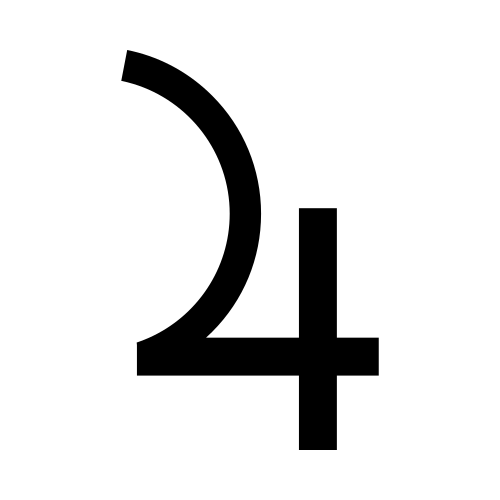 Jupiter
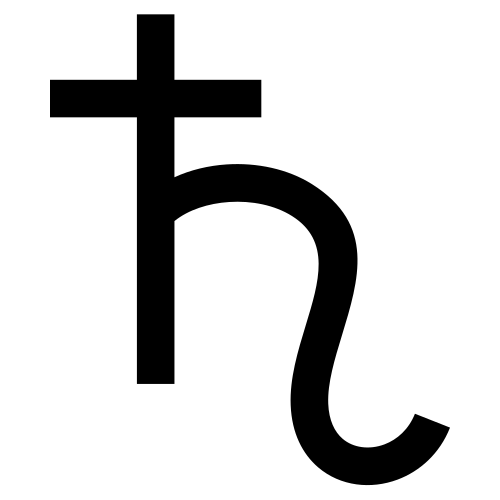 Saturn
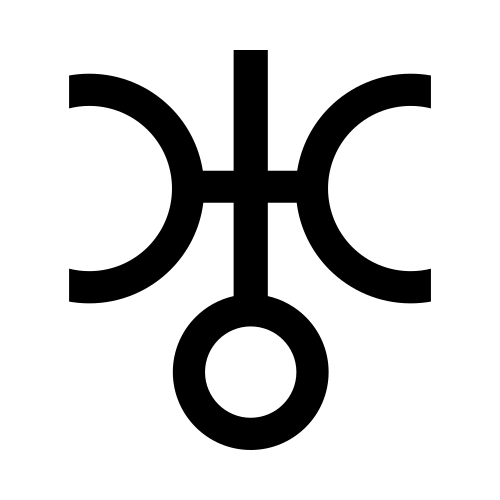 Uranus
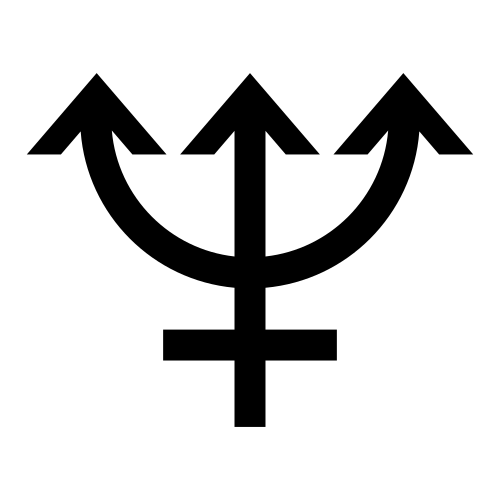 Neptune
 Pluto
Pluto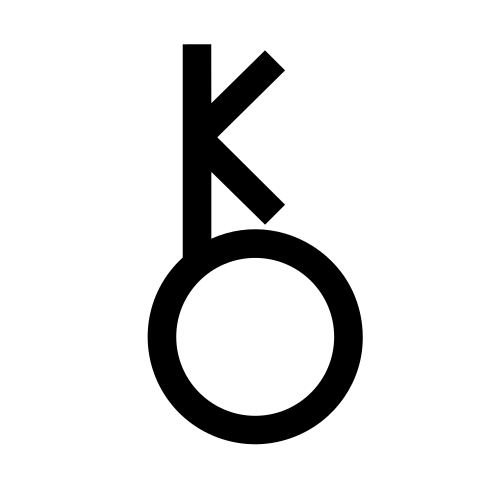 Chiron
Birth time unknown — house positions and Ascendant/MC are not available.
Astronomical context
Those born between approximately 1957 and 1972 carried Pluto in Virgo. This generation grew up during the social upheavals of the 1960s and 1970s — the civil rights movement, the Vietnam War, the sexual revolution, Watergate, the oil crises, and the first stirrings of the environmental movement. They came of age in the 1980s, the decade of Reagan and Thatcher, the personal computer revolution, MTV, and the final acceleration of the Cold War before its sudden end.
In astrological tradition, Pluto in Virgo is associated with collective transformation of the domains that sign governs: work, service, health, craft, method, and the systems through which daily life is organised and perfected. Virgo is the sign of the artisan, the analyst, the editor — the impulse directed not toward grand vision but toward the precision of execution. Pluto's transit through Virgo is read, symbolically, as a period when the institutions of work, health, and technical mastery were subjected to deep structural pressure. The generation that carries this placement inherited a world where the old frameworks of labour, medicine, and craft were being dismantled and rebuilt from the ground up. The symbolic reading is correlative, not causal.
Others in the Astrian collection born under this configuration include Madonna (1958), Maradona (1960), and Whitney Houston (1963). Brad Pitt, born in 1963, belongs to the final years of this generational wave.
Other profiles from this Pluto in Virgo generation
Symbolic reading
The following describes what classical astrological tradition associates with these configurations. Astrian does not apply these descriptions to the person's biography.
The Sun at 26°05' Sagittarius is the most prominent structural feature of this chart. Without a documented birth time, there is no Ascendant or Midheaven — the reading is confined to planetary positions by sign and the aspects between planets.
The Moon at 25°38' Capricorn represents the noon position; the actual placement falls within approximately 7° on either side. If born early in the day, the Moon could be in the low twenties of Capricorn; if born late, in the low single digits of Aquarius. The Moon's sign placement in Capricorn is secure for most of the day, though a very late evening birth could push it into Aquarius.
Mercury at 16°20' Capricorn, Venus at 23°45' Capricorn, and Mars at 10°12' Capricorn complete the personal planet picture — all three in the same sign, forming a Capricorn concentration that dominates the chart by volume.
### The Capricorn concentration
The chart's most distinctive structural feature is the cluster of three planets in Capricorn: Mars at 10°12', Mercury at 16°20', and Venus at 23°45'. If the noon Moon position holds, the Moon at 25°38' adds a fourth body, extending the concentration to nearly 16° of a single sign. This is a stellium — a dense accumulation that channels a large proportion of the chart's personal energy through one zodiacal register.
In the vocabulary of the tradition, Capricorn governs ambition, structure, endurance, the patient construction of form over time, and the willingness to operate within hierarchical systems in order to reshape them from within. It is the sign of the builder, the strategist, the professional who thinks in decades rather than seasons. A concentration of personal planets in Capricorn directs the communicative faculty (Mercury), the aesthetic and relational impulse (Venus), and the will to act (Mars) through this single register. If the Moon is included, the emotional ground itself is Capricornian — rooted in discipline, reserve, and the need for tangible achievement.
Venus and the Moon, if conjoined at 1°53', fuse the emotional and aesthetic dimensions — the sense of value is inseparable from the emotional life, and both operate through the Capricorn register of measured, enduring form rather than spontaneous display.
### Mars trine Uranus: action through originality
Mars at 10°12' Capricorn trines Uranus at 10°04' Virgo retrograde, orb 0°08' — the tightest major aspect in the chart and one of the most exact Mars-Uranus trines in the Astrian collection. Mars governs action, physical will, and the application of force. Uranus governs originality, disruption, and the capacity to see what convention misses. The trine connects them cooperatively across the earth signs — action is infused with inventiveness, and the will to act carries a quality of the unconventional and the surprising.
Mars in Capricorn is in its exaltation — action at its most strategically effective, the will directed not impulsively but with structural precision. Uranus in Virgo retrograde operates through the register of method, craft, and the renovation of inherited systems from within. The trine between them reads as strategic action animated by originality — the capacity to work within established structures while introducing elements that no one expected.
### Mars square Jupiter: ambition under tension
Mars at 10°12' Capricorn squares Jupiter at 9°50' Aries, orb 0°22' — nearly as tight as the Mars-Uranus trine and forming part of a triangular configuration with Uranus. Mars governs the will to act; Jupiter governs expansion, excess, and the impulse to reach further than the immediate task requires. The square forces them into productive friction — action is amplified but also overextended, ambition is enormous but meets resistance from its own scale.
Mars in Capricorn acts with discipline; Jupiter in Aries expands through bold initiative. The square between them runs along the Capricorn-Aries axis — cardinal signs that both initiate but through fundamentally different modes: one through patient strategy, the other through immediate assertion. The tension produces a pattern where the impulse to act decisively coexists with the impulse to act grandly, and neither fully accommodates the other.
The triangular configuration — Mars trine Uranus (0°08'), Mars square Jupiter (0°22'), Jupiter quincunx Uranus (0°14') — places Mars at the centre of a pattern that connects strategic originality with expansive ambition. The quincunx between Jupiter and Uranus adds a note of adjustment: the expansive and the inventive do not blend naturally but require constant recalibration.
### Mercury sextile Neptune: perception and imagination
Mercury at 16°20' Capricorn sextiles Neptune at 16°48' Scorpio, orb 0°28'. Mercury governs communication, perception, and the analytical faculty. Neptune governs the imaginary, the ideal, and the dissolution of boundaries between the real and the not-yet-real. The sextile connects them cooperatively — the perceptive faculty is open to what lies beneath surfaces, and communication carries a quality of depth that exceeds the merely factual.
Mercury in Capricorn perceives through the register of structure, practical consequence, and long-term form. Neptune in Scorpio operates through the register of psychological depth, transformation, and the encounter with what is hidden. The sextile between them reads as a mind that can hold both structural precision and psychological intuition simultaneously — perception that is both practical and penetrating.
### Saturn square Neptune: the builder and the dissolving
Saturn at 19°09' Aquarius squares Neptune at 16°48' Scorpio, orb 2°21'. Saturn governs structure, limitation, and the demands of the real. Neptune governs the ideal, the imagined, and the tendency to dissolve what Saturn tries to solidify. The square introduces a permanent tension between the impulse to build lasting form and the impulse to surrender to something larger than form can contain. In the tradition, Saturn-Neptune squares are read as configurations that oscillate between rigorous discipline and moments when the discipline gives way to something that cannot be structured.
The planetary pattern here is read as a symbolic portrait, not a causal explanation. No planet caused, predicted, or determined any event or characteristic.
Astrology is a symbolic language with 2,500 years of literature. The reading above is interpretive, not explanatory.
Astrian does not claim that the natal chart of Brad Pitt caused or determined any of the above. Astrology is a symbolic system with 2,500 years of literature. Its capacity for retrospective description does not imply explanatory capacity.
A parallel life
The following are verified biographical facts. No connection to the natal chart is implied.
William Bradley Pitt was born on 18 December 1963 in Shawnee, Oklahoma, the eldest of three children of William Alvin Pitt, a trucking company manager, and Jane Etta Hillhouse, a school counsellor. The family moved to Springfield, Missouri, when he was a child, and he grew up in a Southern Baptist household in the Ozarks.
He attended the University of Missouri, majoring in journalism with a focus on advertising, but left two credits short of a degree in 1986 and drove to Los Angeles. He supported himself through odd jobs — driving strippers to parties, dressing as a chicken for El Pollo Loco, moving refrigerators — while studying acting with Roy London.
Early television work included guest appearances on Dallas, Growing Pains, and a recurring role on Another World. The breakthrough came with a single scene: the shirtless hitchhiker in Thelma & Louise (1991), a role that lasted barely fifteen minutes on screen but generated immediate industry attention. A River Runs Through It (1992), directed by Robert Redford, followed; Legends of the Fall (1994) and Interview with the Vampire (1994) established him as a leading man of conspicuous physical beauty whose ambitions extended beyond the roles that beauty would have been sufficient to sustain.
Se7en (1995), directed by David Fincher, marked the beginning of a pattern that would define the second half of his career: choosing directors of strong authorial vision and submitting to their frameworks. 12 Monkeys (1995) brought his first Academy Award nomination, for Best Supporting Actor, playing a manic institutionalised patient with a physicality that bore no resemblance to his previous work. Fight Club (1999), again with Fincher, became a cultural phenomenon whose reception grew more complex with each passing decade.
Snatch (2000) demonstrated a comic register — the incomprehensible Irish Traveller bare-knuckle boxer — that surprised audiences who had categorised him as a dramatic actor. The Ocean's trilogy (2001, 2004, 2007), with Steven Soderbergh, revealed a talent for ensemble work and a screen presence that functioned through understatement rather than domination.
In 2001, he founded Plan B Entertainment, which became one of the most consequential production companies in Hollywood. The company's output included The Departed (2006), 12 Years a Slave (2013, Academy Award for Best Picture), Selma (2014), Moonlight (2016, Academy Award for Best Picture), and Minari (2020). The production work reflected an editorial sensibility: the films Plan B chose to make were consistently more ambitious and more politically engaged than the roles Pitt chose to play.
The Curious Case of Benjamin Button (2008) brought a second Academy Award nomination. The Tree of Life (2011), directed by Terrence Malick, placed him in the most formally experimental work of his career. Moneyball (2011) earned a third nomination and demonstrated the capacity to carry a film through intelligence rather than charisma. Inglourious Basterds (2009) and Fury (2014) explored the register of wartime violence with contrasting tones — comic in Tarantino's case, grave in David Ayer's.
He won the Academy Award for Best Supporting Actor for Once Upon a Time in Hollywood (2019), playing Cliff Booth, a stuntman whose economy of movement and understated competence represented perhaps the most distilled version of his screen persona.
He married Jennifer Aniston in 2000; they divorced in 2005. His relationship with Angelina Jolie, which began during the filming of Mr. & Mrs. Smith (2005), became one of the most scrutinised celebrity partnerships of the era. They married in 2014 and she filed for divorce in 2016. They have six children — Maddox, Pax, Zahara, Shiloh, Knox, and Vivienne — three adopted and three biological. The divorce proceedings extended through 2024 and involved protracted disputes over custody and the shared Chateau Miraval estate in Provence.
His architectural interests led to the founding of the Make It Right Foundation in 2007, which built environmentally sustainable homes in New Orleans's Lower Ninth Ward after Hurricane Katrina. The project later faced structural defect lawsuits, and the foundation was dissolved.
By 2025, he had appeared in more than fifty films. He remains one of the most commercially successful and critically respected actors of his generation, and one of the most influential producers in the American film industry.
Biographical sources
- Waxman, Sharon. Rebels on the Backlot. HarperEntertainment 2005
- Biskind, Peter. Down and Dirty Pictures: Miramax, Sundance, and the Rise of Independent Film. Simon & Schuster 2004
This profile presents the sky at the birth of Brad Pitt and verified facts of their biography. Astrian does not claim that astrology has predictive capacity or that the natal chart determines the trajectory of a life. Astrology is a symbolic system with 2,500 years of literature. Its capacity for retrospective description does not imply explanatory capacity.
Related profiles
Calculate your own birth chart with the same NASA JPL DE441 precision.
Calculate my birth chartLast updated: June 12, 2026
Newsletter
A short reading once a month, in your inbox.
A note on the symbolism of the season, recent editorial pieces, and what to look for in next month's sky. No predictions.
Support this project
Independent, no venture funding, no ads. A contribution keeps Astrian precise and free.
Support on Ko-fi (opens in new tab)