PROFILE · FILM & STAGE
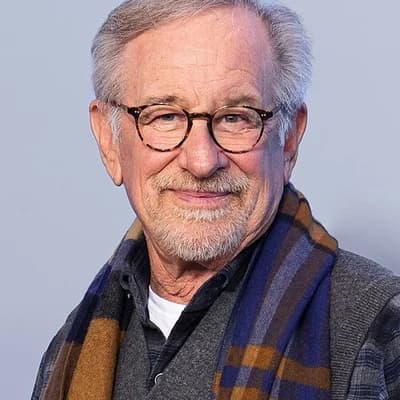
Steven Spielberg
Steven Allan Spielberg
filmmaker
Born 18 December 1946 · Cincinnati, Ohio, United States · 39.10° N, 84.51° WX
Source: Birth time not documented in publicly accessible records
About this chart
No birth time is documented for this person. The chart therefore shows planetary positions in their signs, the slow aspects between them, and the generational context — but not house placements, the Ascendant, or the Midheaven, which require an accurate birth time. The Moon's sign carries a ±6° margin: if it falls near a sign boundary, the sign could vary. Positions for all other planets are reliable.
Do you have a verified source for this birth time? Share it →
The sky at birth
No birth time is documented for Steven Spielberg. The Ascendant, Midheaven, and house positions cannot be determined. The planetary positions below are calculated for noon local time and are accurate to within a fraction of a degree for the slow-moving planets. The Moon's position carries a margin of approximately ±7°.
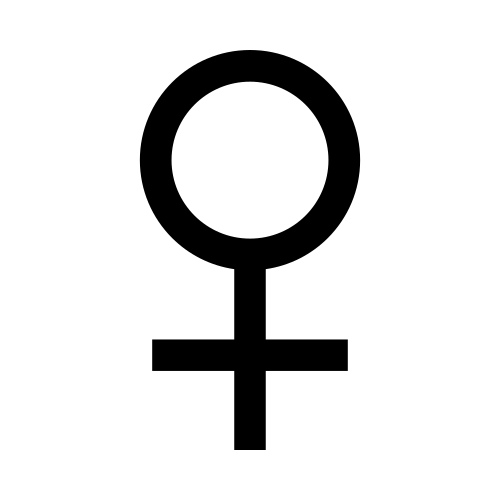
The Sun is at 26°11' Sagittarius. The Moon is at 3°41' Scorpio (noon position, ±7° margin). Mercury is at 7°26' Sagittarius. Venus is at 19°08' Scorpio. Mars is at 0°56' Capricorn. Jupiter is at 17°53' Scorpio. Saturn is at 8°10' Leo R. Uranus is at 19°29' Gemini R. Neptune is at 10°37' Libra. Pluto is at 13°06' Leo R.
Venus at 19°08' Scorpio conjoins Jupiter at 17°53' Scorpio (1°15') — the tightest major aspect in the chart. Mercury at 7°26' Sagittarius trines Saturn at 8°10' Leo retrograde (0°44'). The Sun at 26°11' Sagittarius conjoins Mars at 0°56' Capricorn (4°45'). Saturn at 8°10' Leo retrograde conjoins Pluto at 13°06' Leo retrograde (4°56'). Jupiter squares Pluto (4°47'). Saturn sextiles Neptune at 10°37' Libra (2°27'). Neptune sextiles Pluto (2°28'). Mercury sextiles Neptune (3°11'). The Sun opposes Uranus at 19°29' Gemini retrograde (6°42'). The Moon at 3°41' Scorpio sextiles Mars (2°45') and squares Saturn (4°29'), though both aspects carry the Moon's ±7° uncertainty.
The engine also identifies the following tight minor aspects involving asteroids and calculated points: pallas semi-sextile lilith (0.11° app); neptune trine northNode (0.22° app); chiron semi-sextile juno (0.22° app).
The tightest major aspects between planets: Mercury trine Saturn (0°44'), Venus conjunction Jupiter (1°15'), Saturn sextile Neptune (2°27'), Neptune sextile Pluto (2°28'), Moon sextile Mars (2°45'), Mercury sextile Neptune (3°11'), Moon square Saturn (4°29'), Sun conjunction Mars (4°45'), Jupiter square Pluto (4°47'), Saturn conjunction Pluto (4°56').
The chart was calculated by Astrian's engine using NASA JPL DE441 ephemerides, sub-arcsecond precision. Timezone: Eastern Standard Time (America/New_York, UTC −5).
| Planet | Sign | Position |
|---|---|---|
| Sun | Sagittarius | 26°11' |
| Moon | Scorpio | 03°41'±6° |
| Mercury | Sagittarius | 07°26' |
| Venus | Scorpio | 19°08' |
| Mars | Capricorn | 00°56' |
| Jupiter | Scorpio | 17°53' |
| Saturn | Leo | 08°10'retrograde |
| Uranus | Gemini | 19°29'retrograde |
| Neptune | Libra | 10°37' |
| Pluto | Leo | 13°06'retrograde |
| Chiron | Scorpio | 04°52' |
 Sun
Sun Moon
Moon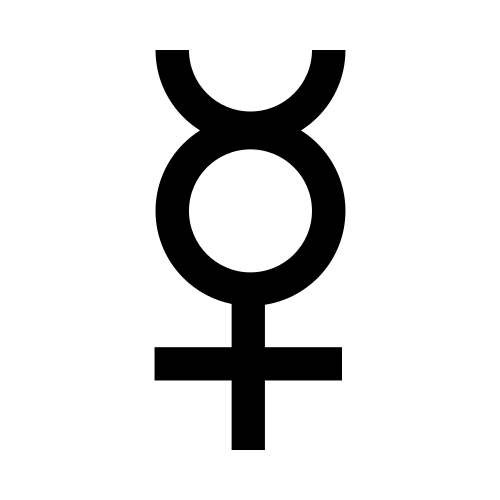 Mercury
 Venus
Venus Mars
Mars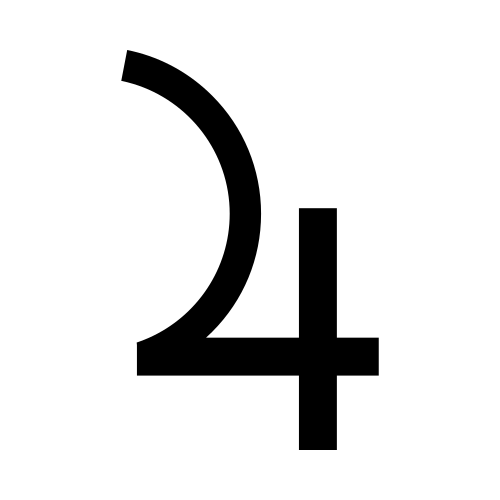 Jupiter
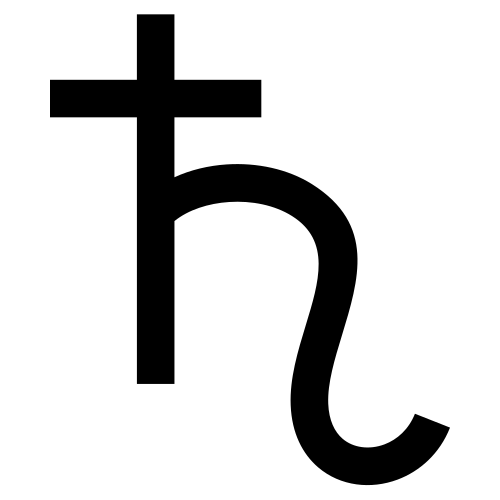 Saturn
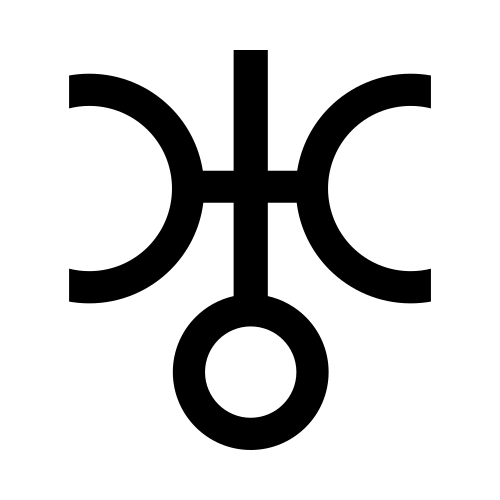 Uranus
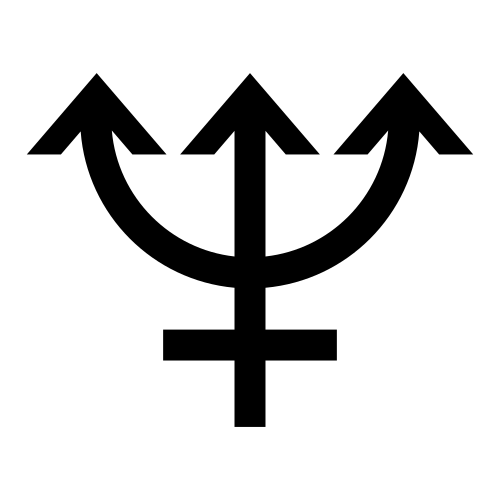 Neptune
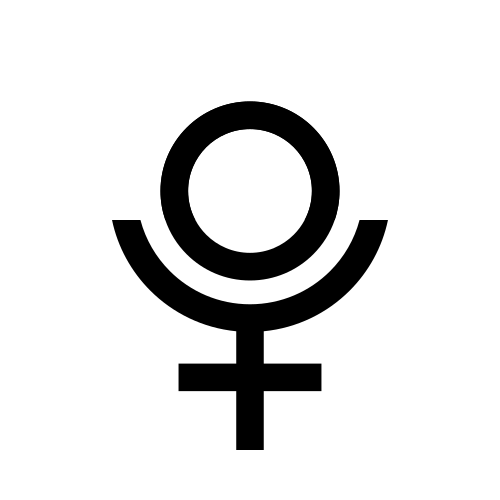 Pluto
Pluto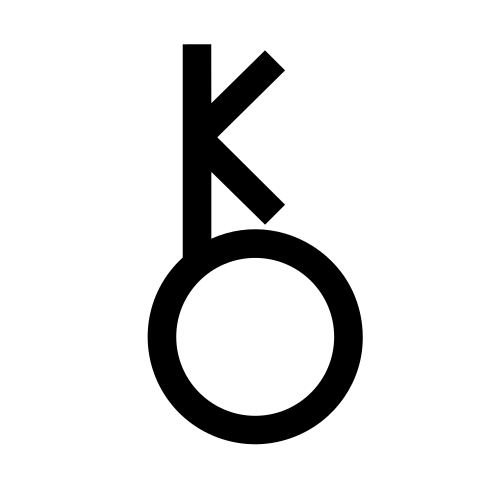 Chiron
Birth time unknown — house positions and Ascendant/MC are not available.
Astronomical context
Those born between approximately 1939 and 1957 carried Pluto in Leo. This generation witnessed the post-war reconstruction of the global order and the rise of mass culture, consumer capitalism, and the first age of television. They came of age during the cultural upheavals of the 1960s and built much of the infrastructure of popular culture, from rock music to the New Hollywood cinema to the social movements that redefined the relationship between the individual and the state.
In astrological tradition, Pluto in Leo is associated with collective transformation of the domains that sign governs: creative self-expression, the ego, the performative, the dramatic, and the structures through which individuals project their identity onto the world. Leo is the sign of the performer, the creator, the king. Pluto's transit through Leo is read, symbolically, as a period when the very concept of individual expression was submitted to deep structural pressure — the old frameworks of who could create, perform, and command attention were broken apart and rebuilt. The generation that carries this placement inherited a world where the amplification of the individual voice through mass media had become the dominant cultural force. The symbolic reading is correlative, not causal.
Other profiles in the Astrian collection born under this configuration include John Lennon (1940), Martin Scorsese (1942), Bob Marley (1945), Freddie Mercury (1946), David Bowie (1947), Meryl Streep (1949), and Tom Hanks (1956). Steven Spielberg, born in 1946, belongs to the middle years of this generational wave.
Other profiles from this Pluto in Leo generation
Symbolic reading
The following describes what classical astrological tradition associates with these configurations. Astrian does not apply these descriptions to the person's biography.
The Sun at 26°11' Sagittarius is the most prominent structural feature of this chart. Without a documented birth time, there is no Ascendant or Midheaven — the reading is confined to planetary positions by sign and the aspects between planets.
The Moon at 3°41' Scorpio represents the noon position; the actual placement falls within approximately 7° on either side. If born early in the day, the Moon could be in the upper twenties of Libra; if born late, in the low tens of Scorpio. The Moon's sign placement is not secure for the entire day — it may have been in late Libra rather than early Scorpio depending on the actual birth time.
Mercury at 7°26' Sagittarius, Venus at 19°08' Scorpio, and Mars at 0°56' Capricorn complete the personal planet picture.
### Venus conjunction Jupiter in Scorpio: the generous eye
The chart's tightest major aspect is Venus at 19°08' Scorpio conjoined with Jupiter at 17°53' Scorpio, orb 1°15'. Venus governs aesthetics, the sense of beauty and value, and the capacity to attract and be attracted. Jupiter governs expansion, meaning, and the impulse to reach beyond the immediate toward the largest possible frame. The conjunction fuses them — the sense of beauty is expansive, generous, oriented toward emotional amplitude rather than restraint.
In Scorpio, this conjunction operates through the register of depth, intensity, and the encounter with what lies beneath the surface. Venus-Jupiter in Scorpio does not beautify by softening; it finds beauty in the intense, the emotionally overwhelming, the moment where feeling exceeds the capacity to contain it. The aesthetic sense is drawn to what moves people profoundly rather than what pleases them gently.
### Mercury trine Saturn: the structured narrator
Mercury at 7°26' Sagittarius trines Saturn at 8°10' Leo retrograde, orb 0°44' — one of the tightest aspects in the chart and a cooperative configuration between the faculty of communication and the faculty of structure. Mercury governs perception, articulation, and the capacity to process and convey information. Saturn governs discipline, form, and the patient construction of enduring structures.
The trine connects them smoothly in fire signs: Mercury in Sagittarius perceives through the lens of the grand narrative, the overarching theme, the story that points beyond itself. Saturn in Leo retrograde structures through the register of dramatic form and an internalised relationship with creative authority. The trine reads as a mind that naturally organises perception into narrative structures — the instinct to give experience a beginning, a middle, and an end, and to make the structure itself part of the meaning.
### The Scorpio concentration
Three bodies occupy Scorpio: the Moon at 3°41' (noon position, sign uncertain), Venus at 19°08', and Jupiter at 17°53'. If the Moon is indeed in Scorpio, this constitutes a three-body concentration in a single sign — the emotional interior, the sense of beauty, and the impulse toward expansion all directed through Scorpio's register of depth and intensity.
The Venus-Jupiter conjunction at the centre of this cluster is its structural heart. But the possible Moon in early Scorpio adds a further dimension: if present, the emotional life itself operates through the Scorpionic register, and the entire feeling apparatus is directed toward what cannot be seen on the surface — toward what must be felt, intuited, and confronted.
### Sun conjunction Mars at the Sagittarius-Capricorn cusp
The Sun at 26°11' Sagittarius conjoins Mars at 0°56' Capricorn, orb 4°45'. The conjunction spans the boundary between Sagittarius and Capricorn — the register of vision, adventure, and the search for meaning (Sagittarius) meets the register of structure, ambition, and the capacity to build within institutional frameworks (Capricorn). The Sun provides the identity; Mars provides the drive. Their conjunction reads as an identity that is inseparable from the will to act, and an action that is inseparable from a sense of purpose.
The cusp position is itself significant: the identity operates at the threshold between the visionary and the pragmatic, between the story and the institution required to tell it at scale.
### Saturn conjunction Pluto in Leo: the weight of creation
Saturn at 8°10' Leo retrograde conjoins Pluto at 13°06' Leo retrograde, orb 4°56'. Saturn governs structure and the weight of responsibility. Pluto governs transformation, power, and the encounter with what lies beneath. Their conjunction in Leo — the sign of creative self-expression — reads as a configuration where creation is not light or playful but carries the full weight of confrontation with power, with history, with the structures that determine what can be made and what cannot.
Jupiter at 17°53' Scorpio squares Pluto (4°47'), adding a dimension of tension between the expansive aesthetic and the structures of power. The expansion of meaning must contend with the weight of institutional authority.
The planetary pattern here is read as a symbolic portrait, not a causal explanation. No planet caused, predicted, or determined any event or characteristic.
Astrology is a symbolic language with 2,500 years of literature. The reading above is interpretive, not explanatory.
Astrian does not claim that the natal chart of Steven Spielberg caused or determined any of the above. Astrology is a symbolic system with 2,500 years of literature. Its capacity for retrospective description does not imply explanatory capacity.
A parallel life
The following are verified biographical facts. No connection to the natal chart is implied.
Steven Allan Spielberg was born on 18 December 1946 in Cincinnati, Ohio, the eldest of four children of Arnold Spielberg, an electrical engineer who had served in Burma during the Second World War, and Leah Posner, a concert pianist. The family was Jewish. They moved to Haddon Township, New Jersey, then to Phoenix, Arizona, then to Saratoga, California — a childhood of repeated displacement that Spielberg later described as formative. His parents divorced when he was nineteen. The experience of a fractured suburban Jewish family, caught between assimilation and memory, became one of the recurring subjects of his work.
He began making amateur films at twelve with an 8mm camera. At sixteen, he completed a forty-minute war film, Escape to Nowhere (1961), using neighbourhood children as extras. His application to the University of Southern California's film school was rejected (he was later awarded an honorary degree). He enrolled at California State University, Long Beach, but dropped out after securing an unpaid internship in the editing department at Universal Studios — the beginning of a relationship with the studio that would last decades.
His first professional work was the television film Duel (1971), a thriller about a businessman menaced by a faceless truck driver on a desert highway. The film demonstrated a command of visual suspense and compositional storytelling that led directly to his first major studio feature. The Sugarland Express (1974) received critical praise but modest commercial returns.
Jaws (1975) changed the film industry. A production beset by mechanical failures, budget overruns, and a hostile ocean, it became the highest-grossing film in history at that time and invented the modern summer blockbuster release model — wide simultaneous release, massive television advertising, and the transformation of the opening weekend into an economic event. He was twenty-eight.
Close Encounters of the Third Kind (1977) confirmed his capacity for spectacle infused with emotional sincerity. Raiders of the Lost Ark (1981), a collaboration with George Lucas, revived the adventure serial for a modern audience. E.T. the Extra-Terrestrial (1982) — a film about a lonely suburban boy who befriends an alien — surpassed Jaws at the box office and became a cultural phenomenon. It was rooted in the landscape of Spielberg's own childhood: the broken home, the absence of the father, the desperate need for connection.
The commercial successes of the early 1980s earned him both extraordinary wealth and a reputation among critics as a talented entertainer who avoided the moral complexity expected of a serious filmmaker. He answered this criticism with The Color Purple (1985) and Empire of the Sun (1987), both of which expanded his dramatic range, though neither was universally acclaimed.
Schindler's List (1993) altered the terms of the conversation permanently. Based on Thomas Keneally's novel about Oskar Schindler, a German industrialist who saved over a thousand Jewish lives during the Holocaust, the film was shot almost entirely in black and white and with a documentary urgency that departed from the controlled spectacle of his earlier work. It won seven Academy Awards, including Best Picture and Best Director. With the profits, he founded the Shoah Foundation, dedicated to recording and preserving the testimonies of Holocaust survivors.
Saving Private Ryan (1998) earned him a second Best Director Oscar. The film's opening sequence — a thirty-minute recreation of the Omaha Beach landing — was widely described as the most viscerally realistic combat footage ever committed to film. Amistad (1997), Munich (2005), Lincoln (2012), Bridge of Spies (2015), and The Post (2017) continued his engagement with historical and political subjects.
He co-founded DreamWorks SKG with Jeffrey Katzenberg and David Geffen in 1994 — one of the few successful attempts to create a new major studio in Hollywood since the classical era. He also produced some of the most commercially significant franchises in film history, including the Jurassic Park series and the Transformers series.
The Fabelmans (2022), a semi-autobiographical film about a young filmmaker growing up in a fractured Jewish family in postwar America, returned to the personal territory that had always been at the centre of his work: the broken home, the absent father, the camera as a way of making sense of what cannot otherwise be understood.
He married actress Amy Irving in 1985; they divorced in 1989. He married actress Kate Capshaw in 1991. He has seven children from the two marriages and a previous relationship.
Biographical sources
- McBride, Joseph. Steven Spielberg: A Biography. Simon & Schuster 1997
- Baxter, John. Steven Spielberg: The Unauthorised Biography. HarperCollins 1996
This profile presents the sky at the birth of Steven Spielberg and verified facts of their biography. Astrian does not claim that astrology has predictive capacity or that the natal chart determines the trajectory of a life. Astrology is a symbolic system with 2,500 years of literature. Its capacity for retrospective description does not imply explanatory capacity.
Related profiles
Calculate your own birth chart with the same NASA JPL DE441 precision.
Calculate my birth chartLast updated: June 12, 2026
Newsletter
A short reading once a month, in your inbox.
A note on the symbolism of the season, recent editorial pieces, and what to look for in next month's sky. No predictions.
Support this project
Independent, no venture funding, no ads. A contribution keeps Astrian precise and free.
Support on Ko-fi (opens in new tab)